Gold Leaf Sugar Cookies: Velvety Crumb
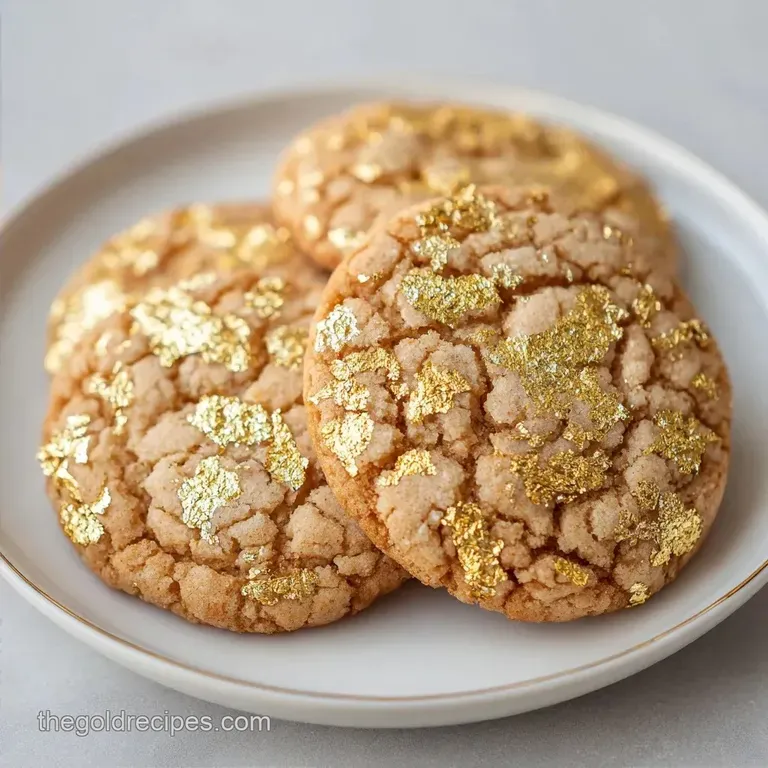
- Time: 15 min active + 2 hours chilling
- Flavor/Texture Hook: Velvety crumb with a shatter crisp gold finish
- Perfect for: Luxury gifting, high end dinner parties, or decoding dessert trends
The silent, metallic crinkle of gold leaf is a sound you don't forget. It's the sound of pure excess. Historically, edible gold wasn't just about showing off wealth in royal courts; it was used in ancient medicine and religious art to signify the divine.
Bringing that tradition into a home kitchen feels like a bit of a hack, taking something meant for palaces and putting it on a simple butter cookie.
I remember the first time I tried to apply gold leaf to a dessert. I used my fingers, and the gold just vanished into my skin, leaving a few sad streaks on the cake. It took some digging into the mechanics of surface tension to realize the gold isn't an ingredient it's a finish.
It requires a completely static, dry surface to bond correctly.
These Gold Leaf Sugar Cookies aren't about complex flavors; they are about the contrast between a humble, nutty cookie and a high shine finish. We're decoding the balance of fats and sugars to create a base that's sturdy enough to hold a glaze but soft enough to melt.
Trust me on this, the prep is the easy part the patience is where the real work happens.
Gold Leaf Sugar Cookies Guide
The secret to this recipe isn't the gold, but the dough's structural integrity. Most sugar cookies spread too much, leaving you with a flat disc that doesn't support a clean glaze. By mixing all purpose flour with almond flour, we change the protein structure.
The almond flour introduces extra fat and disrupts the gluten network, which prevents the cookie from becoming tough while keeping it from pancaking in the oven.
If you've ever made Classic Blondies, you know how critical fat ratios are for that chewy center. Here, we want something slightly more refined. We use coconut sugar for a deeper, caramel like undertone that offsets the neutrality of the gold. It's a subtle hack that makes the cookie taste more expensive than a standard white sugar version.
But what about the gilding? That's where most people trip up. You can't just slap gold on a warm cookie. The residual heat creates a microscopic layer of steam that pushes the gold leaf away, causing it to tear or curl.
We use a specific glaze as a "primer," creating a tacky surface that grabs the gold and holds it in place.
The Hidden Cookie Logic
Fat Stabilization: Chilling the dough for 2 hours solidifies the butter. This means the butter melts slower in the oven, preventing the cookies from spreading.
Protein Modification: Adding almond flour reduces the overall gluten content. This creates a more velvety, tender crumb that doesn't fight the glaze.
Surface Tension: The glaze acts as a bonding agent. Once it sets but remains slightly tacky, it creates the ideal anchor for the gold leaf.
Sugar Caramelization: Coconut sugar has a lower moisture content than brown sugar. It browns faster and provides a toasted flavor profile.
| Method | Chill Time | Texture | Best For |
|---|---|---|---|
| Fast Hack | 0 mins | Thin & Crispy | Quick cravings |
| Classic | 2 hours | Thick & Velvety | Luxury presentation |
The Component Analysis
| Ingredient | Science Role | Pro Secret |
|---|---|---|
| Unsalted Butter | Aeration Base | Soften to 65°F (18°C) for maximum air bubbles |
| Almond Flour | Texture Modifier | Sift it to avoid "grainy" gold application |
| Coconut Sugar | Flavor/Color | Provides a natural tan that makes gold pop |
| Gold Leaf | Visual Finish | Use bamboo tweezers; metal ones tear the leaf |
Ingredients
- 1/2 cup (115g) unsalted butter, softened Why this? Provides the primary structure and richness
- 1/3 cup (65g) coconut sugar Why this? Adds a caramel note and deeper color
- 1 large (50g) egg, room temperature Why this? Binds the fats and flours
- 1 tsp (5ml) vanilla extract Why this? Rounds out the nutty almond flavor
- 1 1/2 cups (190g) all purpose flour Why this? Provides the necessary gluten for shape
- 1/4 cup (30g) almond flour Why this? Ensures a tender, velvety crumb
- 1/2 tsp (3g) baking powder Why this? Gives a slight lift without spreading
- 1/4 tsp (1.5g) fine sea salt Why this? Balances the sweetness of the glaze
- 1/2 cup (60g) powdered sugar Why this? Base for the smooth, white primer
- 1 tbsp (15ml) milk Why this? Adjusts glaze viscosity
- 1/2 tsp (2.5ml) vanilla extract Why this? Adds fragrance to the topping
- 2-4 sheets 24k edible gold leaf Why this? Pure gold is tasteless and biologically inert
Substitution Options:
| Original Ingredient | Substitute | Why It Works |
|---|---|---|
| Coconut Sugar | Brown Sugar | Similar moisture. Note: Result will be paler |
| Almond Flour | Oat Flour | Similar fat profile. Note: Slightly grainier texture |
| Milk | Heavy Cream | More fat. Note: Glaze will be more opaque |
Bringing It Together
Phase 1: Crafting the Dough
- Cream the softened butter and coconut sugar. Mix until the mixture is pale and aerated. Note: This incorporates air for a lighter bite.
- Beat in the egg and vanilla. Mix until fully incorporated and the batter looks smooth.
- Whisk the all purpose flour, almond flour, baking powder, and salt in a separate bowl.
- Gradually fold the dry ingredients into the wet. Mix until a cohesive, velvety dough forms.
- Wrap the dough in plastic. Refrigerate for at least 2 hours. Note: Do not skip this or the cookies will spread.
Phase 2: The Precise Bake
- Preheat oven to 350°F (175°C).
- Roll the chilled dough to a 1/4 inch (6mm) thickness. Cut into circles and place on a parchment lined sheet.
- Bake for 10-12 minutes until edges are barely golden.
- Transfer to a wire rack. Let them cool completely. Note: Warm cookies will melt the glaze.
Phase 3: The Gilding Process
- Whisk together powdered sugar, milk, and vanilla extract. Mix until smooth and glossy.
- Dip the top of each cooled cookie into the glaze. Let set for 10 minutes.
- Using tweezers, carefully drape a sheet of gold leaf over the set glaze.
- Gently press with a dry brush and blow away excess gold.
Chef's Note: If you're struggling with the gold leaf sticking to your tweezers, touch the tweezers to your skin first. The natural oils actually help the gold "release" onto the cookie rather than sticking to the tool.
Fixing Common Glitches
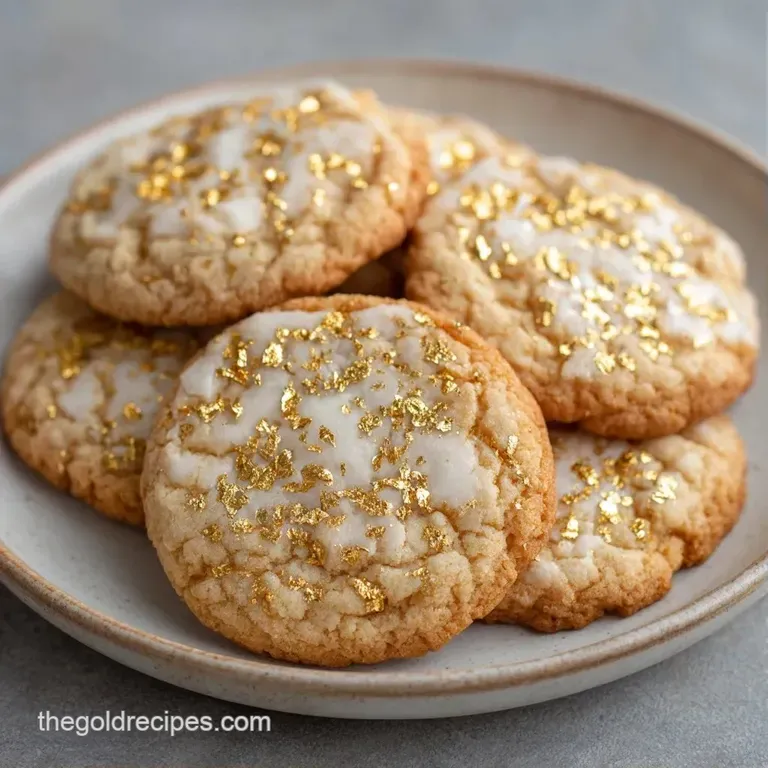
Getting the gilding right is more about physics than cooking. The most common failure is the gold leaf shredding before it hits the cookie. This usually happens because of air currents or moisture. Turn off any ceiling fans or AC vents in your kitchen before you start the gold process.
Troubleshooting Common Issues
| Issue | Solution |
|---|---|
| Why Your Gold Leaf Tears | If the leaf is shattering, your environment is too dry or you're using too much pressure. The gold should practically float onto the glaze. |
| Why Cookies Spread Too Much | This is almost always a temperature issue. If the dough wasn't chilled for the full 2 hours, or if the butter was too soft during creaming, the structure collapses. |
| Why the Glaze Bleeds | If the glaze is too thin, it will run down the sides, creating "drips" that make the gold leaf look messy. The glaze should be thick enough to hold a peak for 2 seconds before sinking. |
Common Mistakes Checklist:
- ✓ Chilled dough for at least 120 minutes
- ✓ Oven preheated to exactly 175°C (350°F)
- ✓ Cookies completely cooled before glazing
- ✓ All fans and vents turned off during gilding
- ✓ Used a dry brush for the final gold press
Twists and Variations
If you want to change the vibe, you can play with the base. For a citrus version, swap the vanilla in the dough for lemon extract and add a teaspoon of lemon zest. The acidity cuts through the richness of the almond flour.
For those who love a deeper chocolate profile, replace 20g of all purpose flour with Dutch process cocoa powder.
If you're looking for other luxury treats, my Pineapple Upside Down Cake uses a similar approach to balancing sweetness and presentation. You can even apply the same gold leaf technique to the cherries on that cake for a cohesive dessert spread.
Decision Shortcut:
- If you want a crunchier edge: Bake for 14 minutes instead of 12.
- If you want a whiter glaze: Use a tiny drop of violet food coloring to neutralize the yellow of the butter.
- If you want a nuttier taste: Toast the almond flour in a pan for 3 minutes before adding to the dough.
Batch Adjustments
Scaling Down (½ Batch): Use 57g of butter and 33g of coconut sugar. For the egg, crack one into a bowl, whisk it, and use exactly 25g. Use a smaller baking sheet to prevent the cookies from being too far apart, which can lead to uneven heat distribution.
Scaling Up (2x Batch): When doubling, don't double the baking powder use 3/4 tsp instead of 1 tsp to prevent the cookies from puffing too much. Work in batches; do not crowd your fridge with too much dough, as the center may not chill fast enough.
If baking two sheets at once, rotate them halfway through the 12 minute mark to ensure an even golden edge.
Truths and Myths
Myth: Gold leaf adds a metallic taste. Truth: Pure 24k gold is chemically inert. It has no flavor and no scent. The taste you experience comes entirely from the coconut sugar and the vanilla glaze.
Myth: You need professional equipment to apply gold. Truth: While bamboo tweezers help, you can use a clean, dry paintbrush or even a piece of parchment paper to "lift" the gold leaf. It's about the lack of moisture, not the tool.
Myth: All edible gold is the same. Truth: Only use gold labeled as "edible" or "E175". Some "decorative" golds contain copper or other metals that aren't safe for consumption.
Freshness and Scraps
Storage Guidelines: Store these in an airtight container with parchment paper between layers. They stay fresh at room temperature for 3 days or in the fridge for 7 days. If refrigerating, let them come to room temperature before eating to restore the velvety texture of the butter.
Freezing: You can freeze the unbaked dough balls for up to 3 months. Thaw in the fridge overnight before baking. Do not freeze the cookies after the gold leaf is applied, as the condensation from thawing will destroy the gold's luster.
Zero Waste Tips: Don't throw away the tiny scraps of gold leaf left in the packet. Collect them in a small glass jar. You can sprinkle these "gold flakes" over a bowl of vanilla ice cream or a chocolate mousse for a quick luxury upgrade.
The Final Look
Plating is everything when you're dealing with gold. Avoid using bright, patterned plates that compete with the shine. Instead, go for matte black or slate gray platters. The dark background makes the 24k gold pop and look more intentional.
To avoid fingerprints during the final serve, handle the cookies by the edges. If a piece of gold peels off, don't panic just use your tweezers to press it back into the glaze.
For a professional touch, serve these alongside a cup of strong espresso; the bitterness of the coffee balances the sweet, velvety nature of the sugar cookie.
Recipe FAQs
How to apply gold leaf to sugar cookies?
Drape the sheet over set glaze using tweezers. Gently press it down with a dry brush and blow away any excess flakes.
Is it true I need a special adhesive to make gold leaf stick?
No, this is a common misconception. The moisture and tackiness of the powdered sugar and milk glaze hold the leaf in place naturally.
Is edible gold leaf safe to eat?
Yes, 24k edible gold is biologically inert. It passes through the digestive system without being absorbed, making it safe for consumption.
What does gold leaf taste like?
It has no taste. Gold is tasteless and odorless, so it adds visual luxury without altering the flavor of the cookie.
Can you put gold leaf on whipped cream?
Yes, it adheres well to moist surfaces. The moisture in the cream allows the leaf to stick instantly upon contact.
How to prevent gold leaf from tearing or shattering?
Minimize pressure and avoid dry environments. Let the gold float onto the surface and use a light touch with a dry brush to secure it.
Why did my sugar cookies spread too much in the oven?
Ensure the dough chills for at least 2 hours. If the dough is too warm or the butter was over softened during creaming, the structure collapses. If you enjoyed mastering temperature control here, see how it works in our gold leaf macarons.
Gold Leaf Sugar Cookies