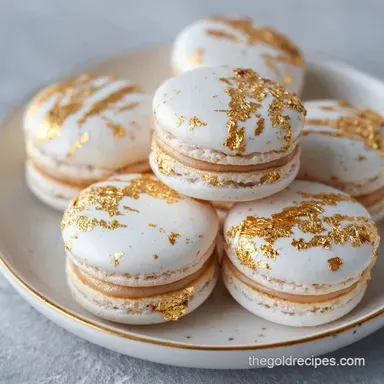
Luminous Gold Leaf Macarons: Shatter Crisp
- Time: 45 min active + 135 min resting/cooling
- Flavor/Texture Hook: Shatter crisp exterior with a silky, buttery core
- Perfect for: High end dinner parties or luxury gift boxes
Gold Leaf Macarons
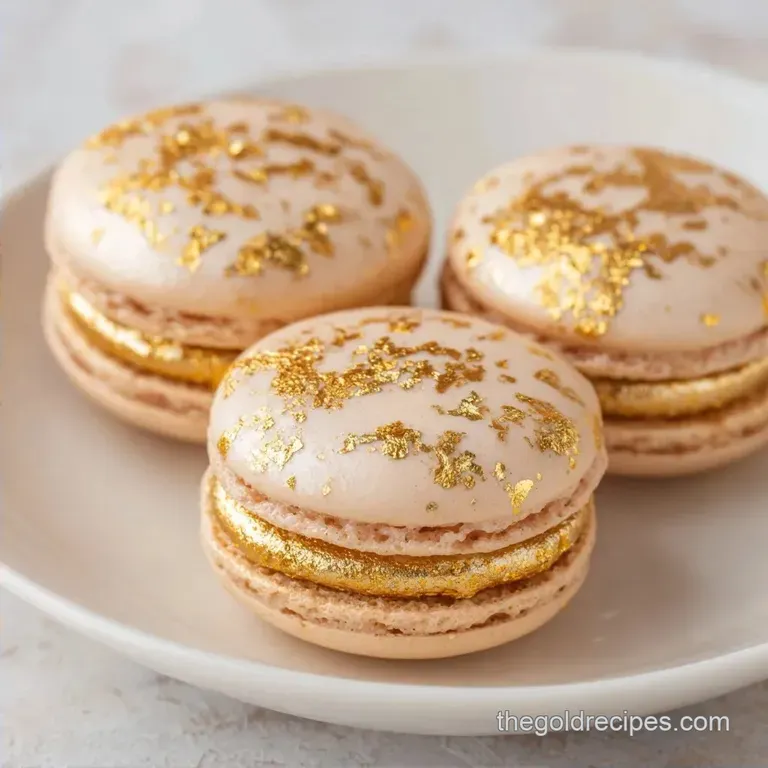
The first thing you notice is that metallic shimmer catching the light, followed by the distinct, clean snap as your teeth break through the shell. There is something about the contrast between the 24K gold and the soft, creamy interior that makes this dessert feel like a cheat code for looking professional in the kitchen.
I remember my first attempt at these. I treated the batter like a standard cake mix and stirred it until it was smooth, completely ignoring the "ribbon stage." The result? Flat, cracked discs that looked more like pancakes than French pastries.
It took me a while to realize that macaronage is actually a lesson in fluid dynamics, not just mixing.
Once I started treating the process like a chemistry experiment, everything changed. Now, I focus on the specific weight of the aged egg whites and the exact second the batter flows.
These Gold Leaf Macarons are all about precision, but once you have the checkpoints down, the result is a consistent, luxury treat every single time.
The Trick Behind the Texture
Making a macaron is basically an exercise in managing air bubbles. We aren't just mixing ingredients, we are building a structural foam that needs to be strong enough to hold its shape but flexible enough to expand upward rather than outward.
Protein Stability: The cream of tartar lowers the pH of the egg whites, which prevents the proteins from bonding too tightly. This creates a more flexible bubble wall that doesn't pop during the folding process.
The Sugar Shield: Powdered sugar isn't just for sweetness. It binds with the almond flour to create a dense matrix that supports the air bubbles, ensuring the shell doesn't collapse when it hits the heat.
Evaporation Gap: Letting the shells sit until a matte skin forms is the secret to the "foot." This skin forces the steam to escape from the bottom of the cookie, pushing the shell upward.
Surface Tension: The gold gel coloring is added at the end of the meringue stage. This ensures the color is integrated without deflating the air we spent ten minutes beating into the whites.
| Method | Time | Texture | Best For |
|---|---|---|---|
| From Scratch | 3 hours | Shatter crisp & chewy | Special occasions |
| Pre made Shells | 30 mins | Denser, less airy | Quick luxury gifts |
| Shortcut Mixes | 1 hour | More like a cookie | Beginners |
Recipe Specs
To get these right, we have to look at what each component is actually doing. Most people think of almond flour as just a flour substitute, but in this recipe, it acts as the primary structural stabilizer.
Component Analysis
| Ingredient | Science Role | Pro Secret |
|---|---|---|
| Aged Egg Whites | Structural Foam | Age them 24 hours to reduce water content |
| Superfine Almond Flour | Frame/Body | Sift twice to avoid "lumps" in the shell |
| Powdered Sugar | Binding Agent | Use a cornstarch free version for a cleaner snap |
| 24K Gold Leaf | Visual Finish | Apply with a dry brush to prevent tearing |
Ingredients & Substitutes
For the Shells:
- 1 cup (100g) superfine almond flourWhy this? Provides the necessary fat and structure for the shell
- 1 1/2 cups (180g) powdered sugarWhy this? Stabilizes the meringue and creates a smooth surface
- 3 large (90g) aged egg whites, room temperatureWhy this? Lower moisture levels prevent shells from cracking
- 1/4 cup (50g) granulated sugarWhy this? Creates the glossy, stiff peaks of the meringue
- 1/2 tsp (2g) cream of tartarWhy this? Prevents the proteins from over coagulating
- 1 drop (1ml) gold gel food coloringWhy this? Gives a deep base color before the gold leaf
Substitute for Almond Flour: Hazelnut flour. Note: Changes flavor to nuttier and makes the shell slightly softer.
For the Velvet Buttercream:
- 1/2 cup (115g) unsalted butter, softenedWhy this? Provides the creamy, velvety base
- 1 1/2 cups (180g) powdered sugar, siftedWhy this? Thickens the filling so the shells don't slide
- 1 tbsp (15ml) heavy creamWhy this? Smooths out the texture of the butter
- 1 tsp (5ml) pure vanilla extractWhy this? Balances the sugar with a floral note
- 1 pinch (1g) fine sea saltWhy this? Cuts through the sweetness
Substitute for Heavy Cream: Full fat coconut milk. Note: Adds a slight tropical hint but maintains the fat ratio.
For the Finish: - 2 sheets 24K edible gold leaf Why this? Purely for the luxury aesthetic and shimmer
Substitute for Gold Leaf: Gold luster dust mixed with lemon extract. Note: Less "metallic" look, more of a shimmer.
The Building Blocks
You don't need a professional kitchen, but you do need a few specific tools to ensure the Gold Leaf Macarons don't end up as expensive crumbs. The biggest mistake is using a regular spoon for the folding process.
A silicone spatula is non negotiable. You need a flexible edge to scrape the sides of the bowl, ensuring no pockets of dry almond flour remain. If you leave dry clumps, they'll create craters in your shells.
For the piping, use a round tip (about 1cm). If you don't have a piping bag, a sturdy Ziploc bag with the corner snipped off works, but you'll lose some control over the pressure.
The most critical "luxury" tool here is a pair of culinary tweezers. Edible gold leaf is so light that the mere act of breathing on it can send it flying across the room. Using tweezers allows you to place the gold with surgical precision.
Step-by-step Instructions
Phase 1: Crafting the Meringue
- Whisk the aged egg whites and cream of tartar on medium speed until frothy.
- Gradually rain in the granulated sugar while increasing speed to high.
- Beat until stiff, glossy peaks form and the meringue holds its shape when the whisk is lifted.
- Gently fold in the gold gel coloring at the very end Note: Over beating after adding color can deflate the foam.
Phase 2: The Macaronage (Folding)
- Gently fold the sifted almond flour and powdered sugar into the meringue using a spatula.
- Use a "cut and fold" motion, scraping the sides of the bowl and pressing the batter against the walls.
- Stop until the batter reaches a ribbon stage, where it falls off the spatula in a thick, continuous fold that disappears back into the batter after 10 seconds.
Phase 3: Piping and Resting
- Pipe 1.5 inch (3.8cm) circles onto a prepared baking sheet.
- Tap the tray firmly on the counter three times to release air bubbles.
- Let the shells sit at room temperature for 60–120 minutes until a matte skin forms and they are no longer sticky to the touch.
Phase 4: Baking and Cooling
- Bake at 300°F (150°C) for 12–15 minutes until the shells no longer wobble when touched.
- Remove from oven and allow to cool completely on the pan before attempting to peel them off.
Phase 5: Assembly and Gold Application
- Beat together softened unsalted butter, sifted powdered sugar, heavy cream, vanilla extract, and fine sea salt until smooth and airy.
- Pipe a dollop of buttercream onto a cooled shell and top with another.
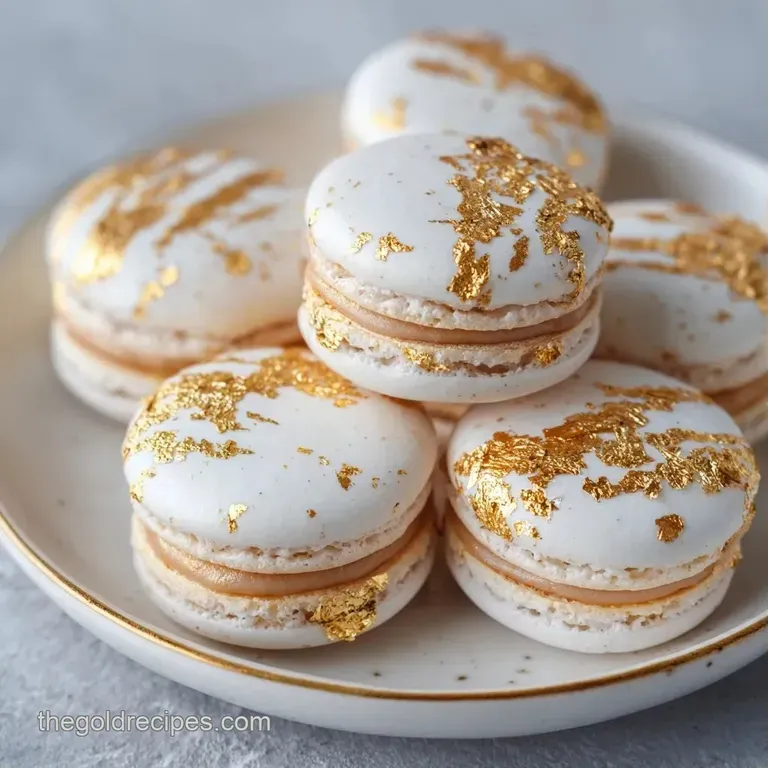
- Carefully apply 24K edible gold leaf to the top using a food grade paintbrush and culinary tweezers.
Avoiding Kitchen Disasters
The most frustrating part of making Gold Leaf Macarons is when they look great in the piping bag but fail in the oven. Most of these issues are caused by humidity or incorrect folding.
Troubleshooting Common Issues
| Issue | Solution |
|---|---|
| Why Your Shells Crack on Top | This usually happens because there were trapped air bubbles in the batter or the shells weren't rested long enough. |
| Why the Shells Are Hollow | Hollow shells are often a sign of over mixing the batter or baking at too high a temperature. When the meringue collapses too quickly, it leaves a void between the top and the foot. |
| Why the Gold Leaf Tears | Gold leaf is incredibly fragile. If your buttercream is too wet or you use a metal tool, the leaf will rip. Always use a dry, soft brush. |
Common Mistakes Checklist
- ✓ Sifted the almond flour and powdered sugar together.
- ✓ Used room temperature, aged egg whites.
- ✓ Tapped the pan to remove air pockets.
- ✓ Verified the "ribbon" consistency before piping.
- ✓ Let the shells dry until they were completely matte.
Make It Your Own
Once you've nailed the base for Gold Leaf Macarons, you can start hacking the flavors. While the gold look is classic, the interior doesn't have to be plain vanilla.
For a more complex flavor, try adding a pinch of espresso powder to the buttercream. This deepens the profile and makes the sweetness feel more mature. If you love a bit of tartness, swap the vanilla for a lemon zest infusion.
If you're craving something even more indulgent, you could replace the buttercream with a dark chocolate ganache. This creates a striking contrast with the gold shells. For another chocolate heavy treat, you might enjoy my Best Classic Blondies Recipe, which has a similar chewy texture.
You can also experiment with the gold application. Instead of a full sheet, try tearing the gold leaf into small flakes for a "splattered" luxury look. It's less formal but looks very modern.
Freezing and Storage Rules
These cookies actually improve after a day or two in the fridge. This is called "maturation," where the moisture from the filling seeps into the shell, creating that signature chewy center.
- Fridge Storage
- Keep them in an airtight container for up to 5 days.
- Freezer Storage
- You can freeze the assembled macarons for up to 2 months. Just wrap the container in foil to prevent any freezer odors from seeping in.
- Reheating
- Do not microwave these. Let them thaw in the fridge overnight, then bring them to room temperature for 30 minutes before serving.
To avoid waste, if you have leftover buttercream, you can use it as a frosting for a small cake. If you have a few broken shells, crush them up and use them as a topping for a Classic Pineapple Upside Down Cake to add a bit of luxury crunch.
Pairing Ideas
Because Gold Leaf Macarons are so rich and sweet, you need something to cut through the sugar. A drink with acidity or bitterness is the way to go.
The Classic Pairing: A strong Earl Grey tea or a double espresso. The tannins in the tea and the bitterness of the coffee balance the buttercream perfectly.
The Luxury Pairing: A glass of chilled Champagne or a dry Prosecco. The bubbles cleanse the palate between bites, and the elegance of the wine matches the aesthetic of the gold leaf.
The Dessert Spread: Serve these alongside a tart fruit platter, like fresh raspberries or sliced green apples. The tartness of the fruit prevents the dessert from feeling too cloying.
Recipe FAQs
How to get gold leaf to stick to macarons?
Use a food grade paintbrush and culinary tweezers. Carefully apply the 24K edible gold leaf to the top of the finished macaron shell.
Is edible gold leaf safe to eat?
Yes. Pure 24K edible gold is chemically inert and passes through the digestive system without being absorbed.
Does adding gold leaf change the flavor of the macaron?
No, this is a common misconception. Edible gold is completely tasteless and is used strictly for visual luxury.
Can you put a gold leaf on whipped cream or fruit?
Yes. Gently press the leaf onto the surface using tweezers, a technique also used for a gold leaf fruit tart.
Why did my macaron shells crack on top?
Ensure you tap the tray firmly three times and let shells rest for 60 120 minutes. Trapped air bubbles or the absence of a matte skin usually cause cracking during baking.
Why are my macaron shells hollow?
Avoid over mixing the batter and bake strictly at 300°F (150°C). Over mixing or excessive heat causes the meringue to collapse, leaving a void between the top and the foot.
How to achieve the ribbon stage when folding?
Stop folding when the batter falls in a thick, continuous fold that disappears after 10 seconds. Use a "cut and fold" motion with a spatula to maintain the meringue's structure.
Gold Leaf Macarons