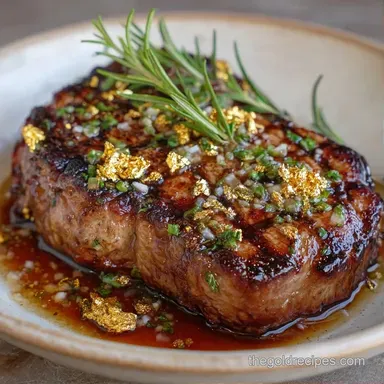
Luxury Gold Leaf Steak Garnish: Velvety Finish
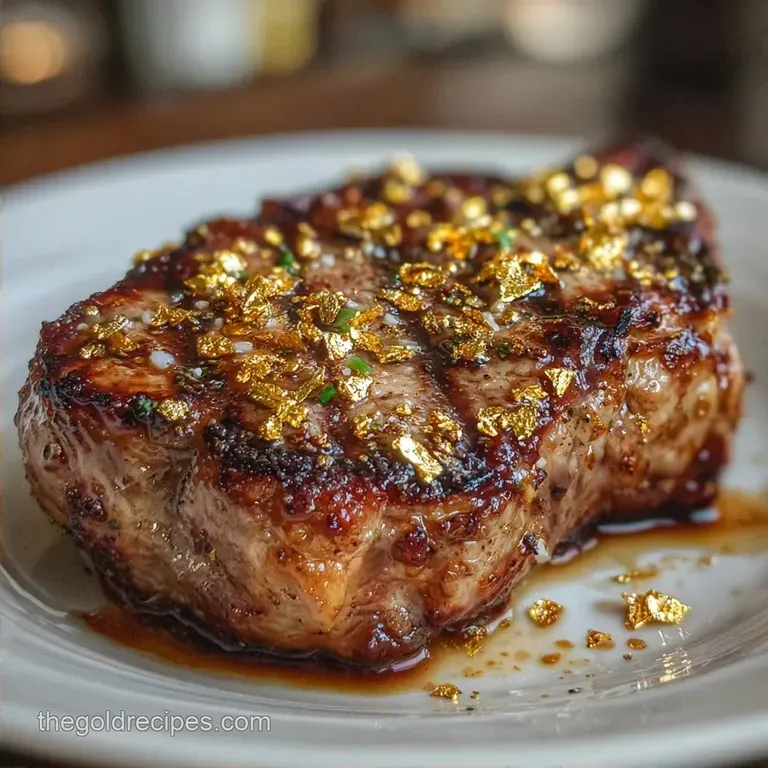
- Time: 10 min active + 12 min cook + 5 min rest
- Flavor/Texture Hook: Mahogany crust with a velvety gold finish
- Perfect for: High end dinner parties or viral food experiments
- The Gold Leaf Steak Garnish Secret
- Understanding Texture Mechanics
- Essential Recipe Specs
- The Component Breakdown
- Necessary Gear List
- Step-by-Step Cooking Process
- Pitfalls and Fixes
- Troubleshooting Common Issues
- Flavor Twist Options
- Adjusting the Scale
- Debunking Gold Myths
- Storage and Scraps
- Perfect Side Pairings
- Very High in Sodium
- Recipe FAQs
- 📝 Recipe Card
The sudden, aggressive sizzle of a Filet Mignon hitting a smoking cast iron skillet is the only way to start this. I remember the first time I tried adding gold to a steak, and it was a total disaster.
I used my fingers, the gold leaf stuck to my skin, and by the time I got it onto the meat, it looked like a crumpled piece of yellow foil rather than a luxury finish. It was an embarrassing mess that ruined a prime cut of beef.
The problem is that gold leaf is incredibly sensitive to moisture and static. If you touch it, the oils on your skin bond to the metal instantly. To fix this, you need to decode the application process, focusing on the tool and the timing.
When you get the Gold Leaf Steak Garnish right, the metal conforms to the contours of the meat, creating a mirror like sheen that looks like something from a high end gallery.
In this guide, we're hacking the process to ensure a flawless result. We'll look at the thermal dynamics of the sear and the physics of the application. You're going to get that mahogany crust and a gold finish that doesn't budge, making this Gold Leaf Steak Garnish the highlight of your meal.
The Gold Leaf Steak Garnish Secret
To get this right, we have to look at the physics of the steak's surface. A steak isn't just meat, it's a landscape of fats and proteins. When we sear the steak, we're creating a crust that is porous and rich in melted butter. This is the key.
If the steak is too cold, the gold won't adhere; if it's too hot, the gold can slightly shift as the meat continues to release steam.
- Surface Tension
- The gold leaf bonds to the residual lipids (fats) on the steak's surface, which act as a mild adhesive.
- Thermal Carryover
- Resting the steak for 5 minutes brings the surface temperature down just enough so the gold doesn't "slide" while still remaining tacky.
- Precision Application
- Using tweezers eliminates the skin to gold contact, preventing the static cling that causes clumping.
- Moisture Control
- Patting the meat dry before searing ensures the crust is crisp rather than steamed, providing a stable base for the gold.
The goal here is a specific interaction between the 24k gold and the butter basted crust. According to Serious Eats, the way you manage the heat in the pan determines the quality of the crust, and without a proper crust, the garnish has nothing to grip onto.
| Method | Time | Texture | Best For |
|---|---|---|---|
| Stovetop | 12 mins | Thick, mahogany crust | Fast, over high heat searing |
| Oven Finish | 20 mins | Even, edge to edge | Very thick cuts (2+ inches) |
Understanding Texture Mechanics
The chemistry of a great steak starts with the sear. We aren't just browning the meat; we're creating a complex layer of flavor through the breakdown of proteins and sugars. When we add the Gold Leaf Steak Garnish, we're adding a visual layer that doesn't change the flavor but changes the entire perception of the dish.
The 24k gold is chemically inert. This means it doesn't react with the acids or salts in the meat. It doesn't have a taste, which is why it's the perfect tool for a "hacker" cook who wants visual impact without compromising the flavor profile of the beef. The real "magic" is in the butter basting.
Adding butter at the end creates a velvety coating that fills the gaps in the crust, giving the gold a smooth surface to lay across.
If you've ever noticed your gold leaf looking "spotty," it's usually because the steak was too dry or too wet. There's a sweet spot of moisture, specifically the melted butter, that allows the leaf to flatten out. If you use a leaner cut without basting, the gold will likely crack or peel.
Essential Recipe Specs
Before we jump into the gear, let's look at the components. We're using a center cut filet for the best visual presentation, as its cylindrical shape provides a great "canvas" for the gold.
| Ingredient | Science Role | Pro Secret |
|---|---|---|
| 24k Gold Leaf | Visual contrast | Use tweezers; never touch with skin |
| Unsalted Butter | Surface adhesive | Add only at the end to prevent burning |
| Coarse Sea Salt | Moisture extraction | Salt early to draw out surface water |
| Neutral Oil | over High heat medium | Use avocado or grapeseed for smoke point |
The Component Breakdown
For this recipe, quality is everything. You can't use "imitation" gold; it must be edible 24k gold leaf to ensure it's safe and chemically inert.
- 1 lb (450g) Center cut Filet Mignon or Sirloin Why this? Consistent shape and high fat content for gold adhesion
- 1 tbsp (14g) Unsalted butter Why this? Creates the velvety base for the gold
- 1 tbsp (15ml) Neutral oil Why this? Prevents sticking at high temperatures
- 1 tsp (6g) Coarse sea salt Why this? Essential for the mahogany crust
- ½ tsp (1g) Cracked black pepper Why this? Adds pungent depth to the beef
- 2 sheets 24k Edible Gold Leaf Why this? Pure gold is tasteless and safe
- 1 pinch (0.5g) Flaky Maldon salt Why this? Adds a "shatter" texture to the finish
If you don't have Maldon salt, you can use a standard flaky sea salt. If you're out of neutral oil, refined coconut oil works, though it adds a very faint sweetness. For the meat, if you can't find Filet Mignon, a thick cut Sirloin is a great alternative, provided you baste it well with butter to compensate for the lower fat.
Necessary Gear List
You can't wing this with a fork and a prayer. You need a few specific tools to decode the gold application.
- Cast Iron Skillet: This is non negotiable. You need the thermal mass to keep the heat steady when the cold meat hits the pan.
- Precision Tweezers: Use the kind used for electronics or beauty. They allow you to lift the gold leaf without tearing it.
- Meat Thermometer: An instant read probe is the only way to hit exactly 130°F (54°C).
- Paper Towels: For removing every single drop of moisture from the surface of the steak.
Step-by-step Cooking Process
Let's get into the actual build. Follow these steps exactly to ensure your Gold Leaf Steak Garnish looks like it came from a professional kitchen.
- Pat the steak completely dry with paper towels. Note: Moisture creates steam, which prevents the crust from forming.
- Heat the neutral oil in a cast iron skillet over high heat until it begins to smoke.
- Sear the steak for 3-4 minutes per side until a mahogany colored crust forms.
- Add the unsalted butter during the last 2 minutes of cooking.
- Baste the meat by spooning the foaming butter over the top until the internal temperature reaches 130°F (54°C).
- Remove the steak from the pan and let it rest on a warm plate for 5 minutes. Note: This allows juices to redistribute so they don't push the gold leaf off.
- Using precision tweezers, carefully lift a sheet of 24k gold leaf.
- Lay the leaf onto the center of the rested steak.
- Press the gold leaf very lightly with the flat side of the tweezers until it conforms to the meat's contours.
- Sprinkle with flaky salt for a finished texture.
Pitfalls and Fixes
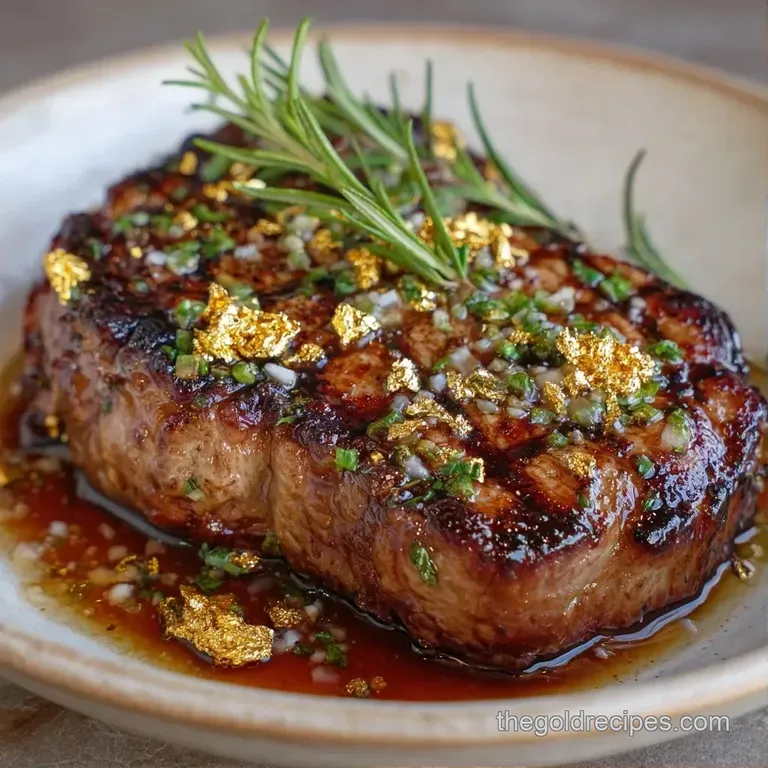
The biggest hurdle with the Gold Leaf Steak Garnish is the "gold clump." This happens when the leaf sticks to itself or the tool. Another common issue is the butter burning, which leaves bitter black specks on your beautiful gold surface.
Troubleshooting Common Issues
| Issue | Solution |
|---|---|
| Why Your Gold Clumps | This is usually caused by static electricity or moisture on the tweezers. If the gold leaf bunches up, it's because it has found a point of adhesion and is pulling toward it. |
| Why Your Steak Is Grey | If your steak lacks a crust, it's because the pan wasn't hot enough or the meat was too wet. A grey steak won't hold the gold leaf as well because it lacks the structural "grip" of a seared crust. |
| Why Your Butter Burnt | Butter has a low smoke point. If you add it too early, the milk solids burn. Only add the butter in the final 2 minutes of the cook. |
Common Mistakes Checklist
- ✓ Touching the gold leaf with bare fingers.
- ✓ Skipping the 5 minute resting period.
- ✓ Using a non stick pan instead of cast iron.
- ✓ Adding butter at the start of the sear.
Flavor Twist Options
While the gold is purely visual, you can hack the flavor of the steak to create more contrast. Adding a garlic herb butter during the basting phase is a great way to add aromatic depth.
I've found that a hint of truffle oil brushed on the meat right before the gold application adds a rich, earthy scent that complements the luxury of the gold.
If you're looking for a complete menu, this rich steak pairs beautifully with a creamy side. I often serve it with a Crockpot Potato Soup for a contrast in textures, the crisp steak and the velvety soup are a match made in heaven.
For those who want to experiment with the gold, you can use gold flakes instead of full sheets. Flakes provide a "starry" effect rather than a solid sheet. This is often easier for beginners because you don't have to worry as much about the leaf tearing.
If you're planning a gold themed dinner, you could even follow up with a decadent dessert like Classic Blondies, perhaps with a tiny bit of gold leaf on top for consistency.
Adjusting the Scale
When you're scaling this Gold Leaf Steak Garnish, the rules change slightly depending on the volume.
Scaling Down (1/2 lb steak): Use a smaller skillet so the butter doesn't spread too thin and burn. Reduce the sear time by about 20% per side, but always rely on the internal thermometer to hit 130°F.
Scaling Up (2-4 lbs of steak): Never crowd the pan. If you put four steaks in one skillet, the temperature will drop, and you'll end up steaming the meat instead of searing it. Work in batches.
Also, don't increase the salt linearly; go to about 1.5x the salt for double the meat to avoid over seasoning.
| Scale | Pan Adjustment | Time Adjustment | Salt Ratio |
|---|---|---|---|
| 1/2 Size | 6 inch skillet | -20% sear time | 1:1 ratio |
| 2x Size | Work in batches | Same per steak | 1.5x ratio |
Debunking Gold Myths
There are a few misconceptions about using gold in cooking that I want to clear up.
First, some people think gold leaf tastes like metal. It doesn't. Pure 24k gold is biologically inert, meaning it passes through your system without any chemical reaction. It has zero flavor.
Second, there's the myth that searing a steak "seals in the juices." This is false. Searing is about flavor and texture (the Maillard reaction). Moisture loss happens regardless of the sear, but a good crust makes the result far more satisfying.
Storage and Scraps
Since this is a luxury dish, you probably won't have leftovers, but if you do, handle them with care.
Storage: Store leftover steak in an airtight container in the fridge for 3-4 days. Note that the gold leaf will likely lose its luster and may peel off as the meat releases moisture in the fridge.
Reheating: Reheat the steak gently in a pan with a knob of butter on medium low heat. Do not microwave it, or the steak will become rubbery. The gold will likely be destroyed during reheating, so you may want to apply a fresh piece of leaf after warming.
Zero Waste: Don't throw away the leftover butter from the pan. It's infused with beef drippings and is incredible for sautéing spinach or drizzling over roasted potatoes.
If you have small scraps of gold leaf, you can crumble them into "gold dust" and sprinkle them over a dessert or a cocktail for a quick luxury upgrade.
Perfect Side Pairings
To balance the richness of the butter basted steak, you need sides that offer acidity or a fresh crunch. A crisp arugula salad with a lemon vinaigrette cuts through the fat and clears the palate. Another great option is roasted asparagus with a squeeze of lime.
If you're going for a more traditional "steakhouse" vibe, a loaded baked potato or creamed spinach works well. Just ensure your sides aren't too "heavy" on the butter, or the meal will feel overwhelming. The goal is to let the Gold Leaf Steak Garnish remain the visual and culinary star of the plate.
Very High in Sodium
1213 mg 1213 mg of sodium per serving (53% 53% of daily value)
The American Heart Association recommends a daily sodium limit of no more than 2,300 mg for most adults to maintain heart health.
Tips to Reduce Sodium in Your Steak
-
Cut the Sea Salt-30%
Reduce the coarse sea salt by half or substitute with a salt-free steak seasoning to significantly lower the primary sodium source.
-
Omit Finishing Salt-10%
Completely remove the flaky Maldon salt garnish; since the meat is already seasoned, the extra pinch is unnecessary.
-
Enhance with Acid-10%
Add a squeeze of fresh lemon juice or a drizzle of balsamic glaze over the meat to mimic the 'brightness' of salt.
-
Use Fresh Aromatics
Sauté fresh rosemary, thyme, or crushed garlic in the butter to add savory depth without adding any sodium.
Recipe FAQs
How to put gold leaf on steak?
Use precision tweezers to lift a sheet of 24k gold leaf. Lay it onto the center of the rested steak and press lightly with the flat side of the tweezers to conform to the meat's contours.
What does gold leaf taste like?
It is completely tasteless. Edible gold is biologically inert, meaning it provides no flavor or aroma to the dish.
How to cook with gold leaves?
Apply the gold leaf after the cooking process is finished. Because it is so delicate, it will burn if added to the pan; always place it on the steak after it has rested for 5 minutes.
Can you put gold leaf on whipped cream?
Yes, it adheres well to creamy textures. If you enjoyed the luxury aesthetic here, the same application method is used for our gold leaf cookies.
Does gold leaf taste different when stored versus fresh?
No, the taste remains identical. Since it has no flavor profile, storage does not alter the taste, although the leaf may lose some luster over time.
What should I garnish my steak with?
Use 24k edible gold leaf and flaky salt. The gold provides a high-end visual, while the salt adds a contrasting crunch to the mahogany crust.
Does the texture of the steak affect how the gold leaf looks?
Yes, a proper sear is necessary. A grey steak lacks the structural grip of a seared crust, which can cause the gold leaf to clump or fail to adhere properly.
Gold Leaf Steak Garnish in 27 Minutes