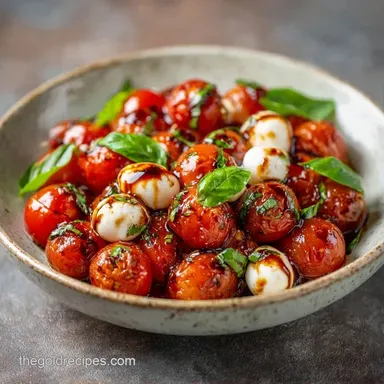
Balsamic Glaze Caprese Bites: Tangy and Bright
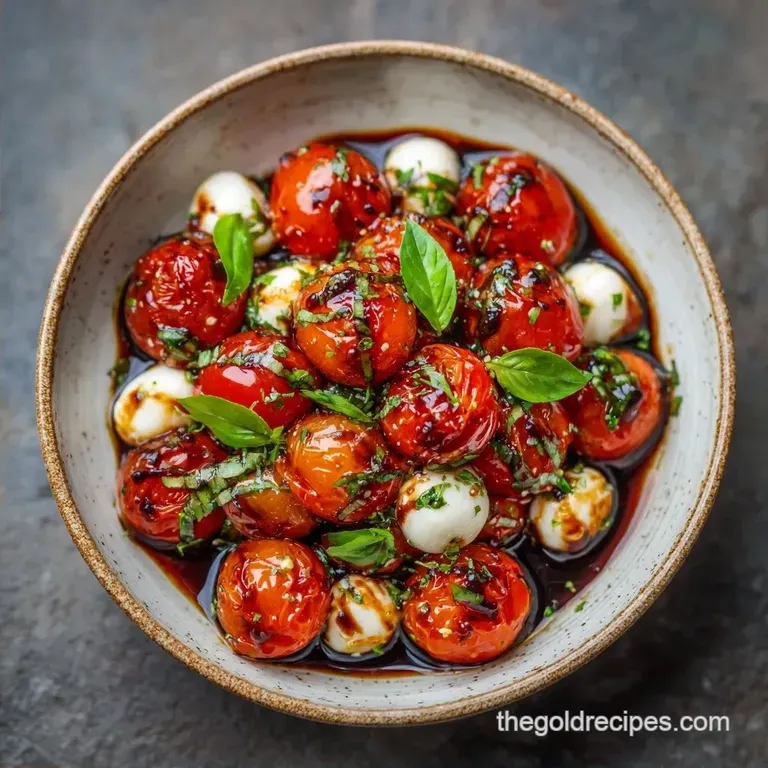
- Time:15 minutes active
- Flavor/Texture Hook: Tangy, creamy, and bright
- Perfect for: Summer parties and quick appetizers
The smell of fresh basil hitting a platter always reminds me of those frantic July dinner parties where everything happens at once. You see those fancy platters at restaurants where the glaze looks like a work of art, but at home, it usually ends up as a brown puddle at the bottom of the plate.
I used to think the only way to fix that was buying the most expensive, thick syrup available.
Forget the idea that you need a professional kitchen or a fancy reduction to get that look. The real problem isn't the glaze, it's the water. Most people just throw tomatoes and cheese on a stick and wonder why the dressing runs off.
These Balsamic Glaze Caprese Bites are about control. When you get the moisture under control, the flavors actually sit on the food. It's a simple shift that turns a soggy snack into something that actually looks like you spent an hour on it.
Simple Balsamic Glaze Caprese Bites
The trick here is all about surface tension. If your mozzarella or tomatoes have any lingering moisture, the glaze can't grip the surface. It just slides right off, leaving you with a watery mess.
Dry Surfaces: Patting ingredients dry creates a tacky surface for the oil and glaze to cling to. Folded Basil: Folding the leaf creates a structural barrier that keeps the cheese and tomato from sliding.
| Approach | Prep Time | Texture | Best For |
|---|---|---|---|
| Fresh Hand Torn | 20 mins | Rustic/Irregular | Intimate dinners |
| Precision Pearls | 15 mins | Uniform/Tidy | Large parties |
What Each Ingredient Does
| Ingredient | What It Does | Best Swap |
|---|---|---|
| Cherry Tomatoes | Adds acidity and pop | Grape tomatoes |
| Mozzarella Pearls | Provides creamy fat | Cubed fresh mozzarella |
| Fresh Basil | Adds peppery freshness | Baby spinach (bland) |
| Balsamic Glaze | Adds sweet/tart depth | Balsamic reduction |
For the best results, grab the smallest mozzarella pearls you can find. I usually go for the ones that are almost the same size as the cherry tomatoes. It keeps the bite balanced so one ingredient doesn't overwhelm the others.
The Tool Kit
You don't need much here. A few bamboo skewers (the 4 inch ones work best) and a sturdy platter are the basics. If you have a squeeze bottle for the glaze, use it. It gives you way more control than a spoon, which often leads to big, messy globs.
From Prep to Plate
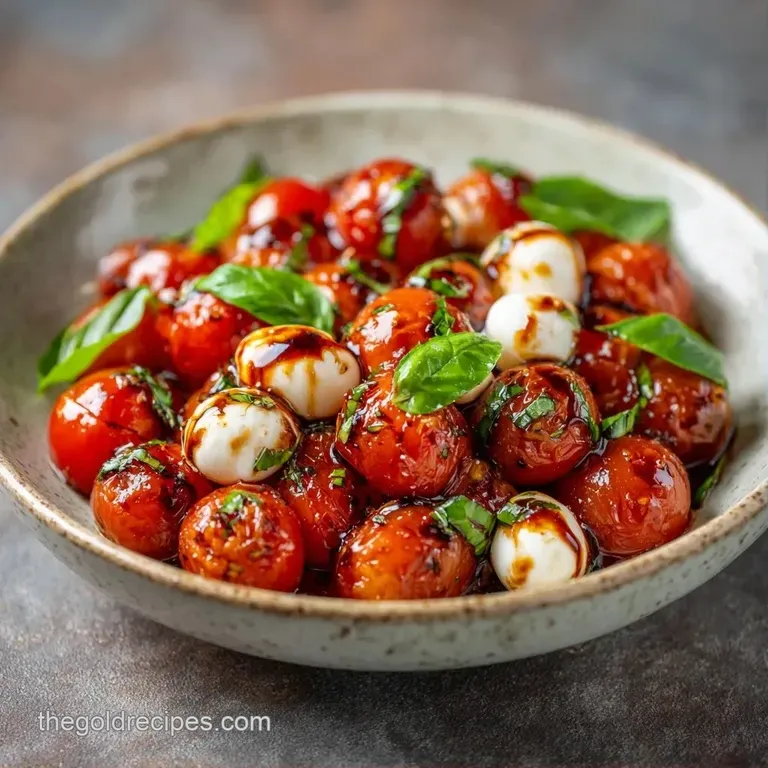
Right then, let's get these assembled. It's a fast process, but the order matters.
- Pat the cherry tomatoes and mozzarella pearls completely dry with paper towels. Note: This is the most important step for glaze adhesion.
- Fold each basil leaf in half or quarters to create a tight pocket.
- Thread the bamboo skewers in this order: cherry tomato, folded basil leaf, and then a mozzarella pearl.
- Arrange the assembled skewers on a serving platter.
- Lightly drizzle the skewers with olive oil.
- Sprinkle with sea salt and freshly cracked black pepper.
- Use a squeeze bottle to apply the balsamic glaze in a zig zag motion across the skewers. until the glaze coats the tops without pooling.
The total time is 15 minutes. Since there is no heat involved, you just have to focus on the assembly. If you're making a huge batch, I find it's faster to line up all the tomatoes, then all the basil, and then all the cheese before you start threading.
Fixing Common Issues
When things go wrong with this recipe, it's usually a moisture issue. You might notice the glaze separating or the basil turning black.
Why Your Glaze Slides Off
If the glaze is pooling at the bottom, your ingredients were likely too wet. The oil and balsamic can't bond to a layer of water.
Why the Basil Wilts
Basil is sensitive to acid. If you glaze the bites too early, the balsamic vinegar breaks down the cell walls of the leaf, turning it a dark, unappealing brown.
The Slippery Skewer
Sometimes the cheese slides right off the stick. This happens if the mozzarella is too soft or the skewer is too smooth.
| Problem | Root Cause | Solution |
|---|---|---|
| Watery Platter | Wet ingredients | Pat dry with towels |
| Brown Basil | Glazed too early | Apply glaze right before serving |
| Sliding Cheese | Over ripe mozzarella | Use firm, chilled pearls |
Making It Your Own
You can easily change the vibe of these bites depending on who is coming over. If you want something more complex, try adding a tiny piece of pitted Kalamata olive between the tomato and basil. It adds a salty punch that cuts through the sweetness of the glaze.
For those who want a different twist, you might like the bright notes in a Pomegranate Christmas Salad, which uses a similar balance of acid and sweetness.
If you want X, do Y: If you want more heat, add a pinch of red pepper flakes to the olive oil. If you want more depth, use a drizzle of honey mixed into the balsamic. If you want a crunch, add a toasted pine nut to the top of each bite.
When you're scaling this up for a crowd, don't just multiply the salt and pepper by four. Start with 1.5x the seasoning and taste as you go. You can always add more, but you can't take it away once it's on the cheese.
Storage and Zero Waste
These are best eaten fresh, but you can keep them in the fridge for about 24 hours. If you store them, keep the glaze in a separate container. Only apply the glaze the second you're ready to serve them. Otherwise, the basil will wilt and the tomatoes might leak.
Don't throw away the leftover basil stems. I usually toss them into a blender with some olive oil and garlic to make a quick pesto. If you have a few leftover mozzarella pearls, they're great chopped up in a quick pasta.
If you enjoy these Italian style flavors, you'll probably love a Chicken Cacciatore for your main course. Both rely on that classic combination of tomato and basil.
Presentation Strategy
The magic of Balsamic Glaze Caprese Bites is the color contrast. You have the bright red, stark white, and deep green. To make them look professional, focus on the "color balance" and the way they sit on the plate.
The Radial Array
Instead of lining them up in rows, arrange the skewers in a circle or a spiral. This makes the platter look full and inviting. Leave a little bit of space between each skewer so the glaze doesn't merge into one big brown lake.
Adding Color Accents
- 1. Fresh Basil Sprigs
- Tuck a few whole, small leaves around the edges of the platter for extra green.
- 2. Cracked Black Pepper
- The coarse black grains contrast beautifully against the white mozzarella.
- 3. Extra Virgin Olive Oil
- A final, very light drizzle gives the tomatoes a glossy, high end look.
Add the basil sprigs first, then the skewers, and finish with the zig zag glaze. This keeps the garnish fresh and the glaze focused on the food. Since this is a cold appetizer, the visual appeal does most of the heavy lifting. Keep the lines clean, and it'll look like it came from a catering company.
Recipe FAQs
Is balsamic glaze good for caprese?
Yes, it is the ideal topping. The sweet and tangy profile of the glaze cuts through the richness of the mozzarella pearls perfectly.
When to put balsamic glaze on caprese skewers?
Drizzle immediately before serving. Applying it too early causes the tomatoes to leak and the basil to wilt.
Can caprese bites be made ahead of time?
Yes, up to 24 hours. Store the assembled skewers in the fridge, but keep the glaze in a separate container until the moment you serve them.
How to stop the glaze from sliding off the ingredients?
Pat the cherry tomatoes and mozzarella pearls completely dry. Use paper towels to remove surface moisture so the thick glaze clings to the skewers.
Is it true that any size mozzarella can be used for these bites?
No, this is a common misconception. Fresh mozzarella pearls are essential for the correct scale and to ensure the bite stays secure on the bamboo skewer.
Can I substitute the basil with another green?
Yes, though fresh basil is traditional. If you enjoy the savory profiles of our roasted asparagus, you might try a small piece of baby spinach instead.
Why does the basil wilt if I glaze the skewers early?
The acid and sugar in the glaze break down the leaf structure. Applying the drizzle seconds before serving keeps the basil crisp and vibrant.
Balsamic Glaze Caprese Bites