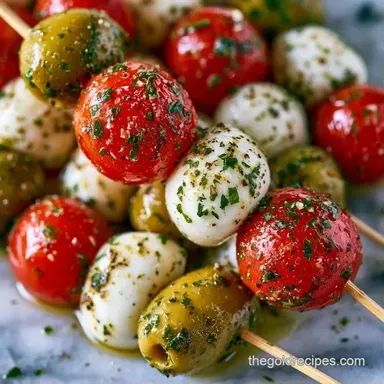
Antipasto Skewers with Balsamic Glaze
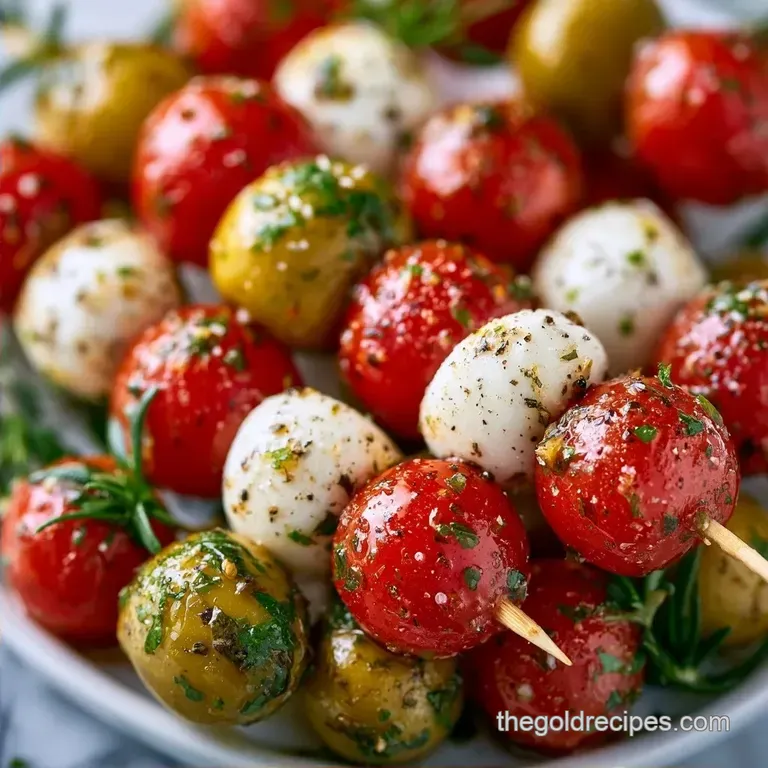
- Time: 20 min active
- Flavor/Texture Hook: Tangy glaze and salty, briny pops
- Perfect for: Party appetizers or a quick cocktail hour
- The Antipasto Skewers Recipe
- Why These Flavors Just Click
- What Each Ingredient Does
- Tools for Quick Assembly
- Putting the Skewers Together
- Solving Common Assembly Problems
- Troubleshooting Common Issues
- Different Ways to Build
- Quick Truths About Antipasto
- Freshness and Leftover Tips
- Plating for Every Occasion
- Recipe FAQs
- 📝 Recipe Card
The Antipasto Skewers Recipe
The smell of fresh basil and pungent balsamic vinegar always reminds me of those chaotic summer parties where everyone is crowded around a small kitchen island. I once tried making these with cheap, canned olives, and they tasted like salt water and disappointment.
It was a lesson in ingredient quality, because when you aren't cooking things for hours, the quality of the raw product is everything.
That's why I use Castelvetrano olives here. They have a buttery, mild flavor that doesn't overpower the mozzarella, unlike those sharp, metallic black olives you find in tins. This Antipasto Skewers Recipe relies on that balance of brine and cream.
You can expect a bright, colorful spread that looks like you spent hours on it, but actually comes together in about 20 minutes. It's the kind of dish that makes you look like a pro without requiring any actual heat, other than a quick simmer for the glaze.
Why These Flavors Just Click
Acid Fat Balance: The vinegar in the glaze and the artichokes cuts through the heavy fat of the salami and cheese.
Textural Contrast: You get a snap from the tomato, a chew from the tortellini, and a soft give from the mozzarella.
Brine Synergy: Using marinated ingredients means the flavors are already deep, so you don't need to marinate the skewers themselves.
| Guests | Skewers Needed | Salami Amount | Tortellini Amount |
|---|---|---|---|
| 4 People | 12-16 | 170g | 230g |
| 8 People | 24-32 | 340g | 460g |
| 12 People | 36-48 | 510g | 690g |
What Each Ingredient Does
| Ingredient | What It Does | Best Swap |
|---|---|---|
| Castelvetrano Olives | Adds a buttery, salty punch | Kalamata (more tart) |
| Balsamic Vinegar | Provides the acidic "bright" note | Pomegranate molasses (sweeter) |
| Cheese Tortellini | Adds a hearty, filling element | Cubed sourdough (crunchier) |
| Mini Mozzarella | Cools down the salty meats | Feta chunks (saltier) |
Tools for Quick Assembly
You don't need a fancy kitchen for this, but a few specific things make it faster. I use 4 inch bamboo skewers, which are sturdy enough to hold the tortellini without bending. A small saucepan is necessary for the glaze, as a wide pan will make the vinegar evaporate too quickly.
I also suggest using a large sheet pan or a flat platter for assembly. It's much easier to line up your ingredients in rows and thread them like a factory line than to fumble with individual pieces on a cutting board.
Putting the Skewers Together
Phase 1: Component Preparation
Boil your cheese tortellini until they are al dente, usually about 2-3 minutes after the water returns to a boil. Immediately rinse them under cold water to stop the cooking and pat them dry with a paper towel. If they stay wet, the glaze will slide right off.
Slice the salami into 0.6 cm rounds. Quarter your marinated artichoke hearts so they sit flat on the skewer. Drain the mozzarella pearls well so you don't have a puddle of oil on your platter.
Phase 2: The Strategic Stack
Follow the Anchor Method to keep the skewers from sliding. Thread a grape tomato first, as its firmness holds the other items in place. Follow with a mozzarella pearl, a salami slice, an olive, an artichoke heart, and a piece of tortellini. Finish the stack with a basil leaf folded in half.
Repeat this for all your ingredients. This specific order ensures the weight is distributed evenly, so the skewers don't tip over when you set them down.
Phase 3: The Final Glaze
Combine the balsamic vinegar, honey, and black pepper in a small saucepan. Heat over medium for about 5-7 minutes until the liquid bubbles and coats the back of a spoon. It should be smooth and glossy.
Arrange your finished skewers on a platter. Drizzle the warm glaze over them immediately before guests arrive. If you do it too early, the basil will wilt and the vinegar will soak into the cheese.
Solving Common Assembly Problems
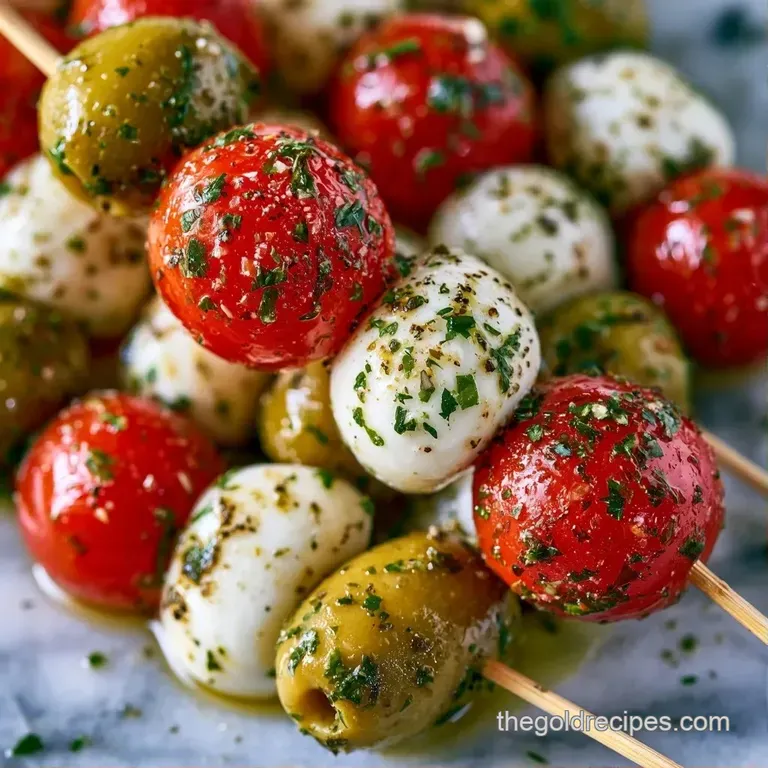
The most frustrating part of this Antipasto Skewers Recipe is when ingredients start sliding off or the glaze tastes too sour. Usually, this comes down to moisture control.
Troubleshooting Common Issues
| Issue | Solution |
|---|---|
| Why Your Skewers Are Slippery | If your mozzarella or artichokes are too oily, the other ingredients won't "grip" the skewer. This happens when you skip the draining step. Pat everything dry with a lint free towel before assembly. |
| Why Your Glaze Is Too Thin | If the balsamic doesn't thicken, it will just pool at the bottom of the plate. This is usually because the heat was too low or you didn't simmer it long enough. |
| Why Your Basil Is Wilting | Basil is delicate and reacts quickly to heat and acid. If you drizzle the glaze directly on the leaves and let them sit for an hour, they will turn black. Apply the glaze just before serving. |
Different Ways to Build
If you want a lighter version, you can swap the salami for folded pieces of prosciutto. It's thinner and gives a more elegant look. For those who want more crunch, I highly recommend serving these alongside some homemade pita chips to add a toasted element to the meal.
You can also change the vibe based on what's in your fridge. A "Spicy Italian" version uses pepperoncini instead of olives and a spicy capicola instead of salami.
Decision Shortcut:
- If you want a heartier meal, double the tortellini.
- If you want it vegan, swap mozzarella for marinated tofu and salami for sun dried tomatoes.
- If you want a faster prep, use pre cut antipasto platters from the deli.
Quick Truths About Antipasto
Many people think you have to marinate the skewers for hours to get the flavor. That's not true. Since we use marinated olives and artichokes, the flavor is already there. The glaze provides the final hit of acidity.
Another myth is that you need expensive imported cheeses. While Buffalo mozzarella is great, standard mini pearls work perfectly because they hold their shape better on a stick.
Freshness and Leftover Tips
Store any unused skewers in an airtight container in the fridge for up to 2 days. Do not glaze them if you plan to store them, as the vinegar will break down the vegetables and make them mushy.
For zero waste, take any leftover balsamic glaze and whisk it into some olive oil and Dijon mustard to make a quick salad dressing. If you have leftover tortellini, toss them into a pan with garlic and butter for a quick lunch.
Plating for Every Occasion
The way you present this Antipasto Skewers Recipe can change the whole mood of the party. I like to offer three different levels depending on who is coming over.
Simple: Lay the skewers flat on a white ceramic platter. Drizzle the glaze in a zig zag pattern across the whole thing. This is great for casual family gatherings.
Polished: Arrange the skewers in a tight circle to create a "Charcuterie Wreath." Place a small bowl of extra olives or a mound of grapes in the center. This looks intentional and takes about two extra minutes.
Restaurant: Stand the skewers up at a slight angle on a dark slate board. Use a squeeze bottle to place small, precise dots of balsamic glaze around the board, then lean the skewers against each other. This is the way to go if you're pairing this with something heavy, like a creamy potato soup.
| Plating Level | Layout | Glaze Style | Best For |
|---|---|---|---|
| Simple | Flat | Zig zag | Family |
| Polished | Circle | Central Pool | Parties |
| Restaurant | Vertical | Precision Dots | Date Night |
Recipe FAQs
What ingredients are used in these antipasto skewers?
Salami, mozzarella pearls, grape tomatoes, olives, marinated artichoke hearts, cooked cheese tortellini, and fresh basil. These are finished with a reduced balsamic glaze made from balsamic vinegar, honey, and black pepper.
Can I assemble antipasto skewers the day before?
Yes, but avoid adding the glaze. Assemble the skewers and store them chilled, then drizzle the reduced balsamic glaze immediately before serving to maintain texture.
How to prevent the ingredients from slipping off the skewer?
Pat all ingredients dry with a lint free towel. If mozzarella pearls or artichokes are too oily, they won't grip the skewer, causing the assembly to slide.
How to thicken the balsamic glaze if it is too thin?
Simmer the mixture over medium heat for longer. A thin glaze usually results from heat being too low or not reducing the vinegar and honey enough. If you enjoyed mastering this reduction technique here, see how the same simmering principle works in our cranberry sauce.
Is it true that the balsamic glaze should be added long before serving?
No, this is a common misconception. Adding glaze too early causes the ingredients to soften and lose their structure; always drizzle immediately before serving.
How to keep the basil leaves from wilting?
Add the folded basil leaves as the final step. Basil is delicate and reacts quickly to the acid in the balsamic glaze and the heat of the kitchen.
How to prepare the tortellini for skewers?
Boil until al dente, rinse with cold water, and pat dry. This process ensures the pasta is firm enough to stay on the skewer and prevents the pieces from sticking together.
Antipasto Skewers Recipe