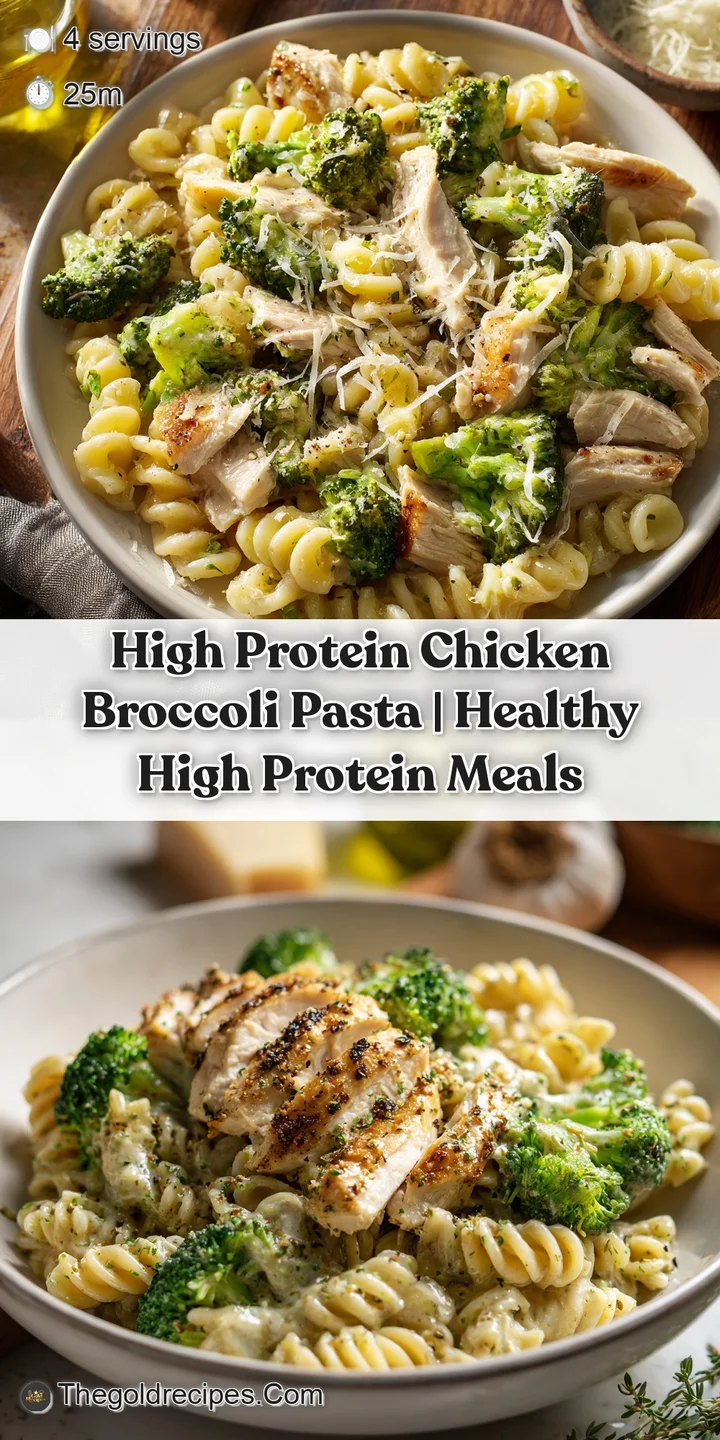
High Protein Chicken Broccoli Pasta: Creamy and Garlic
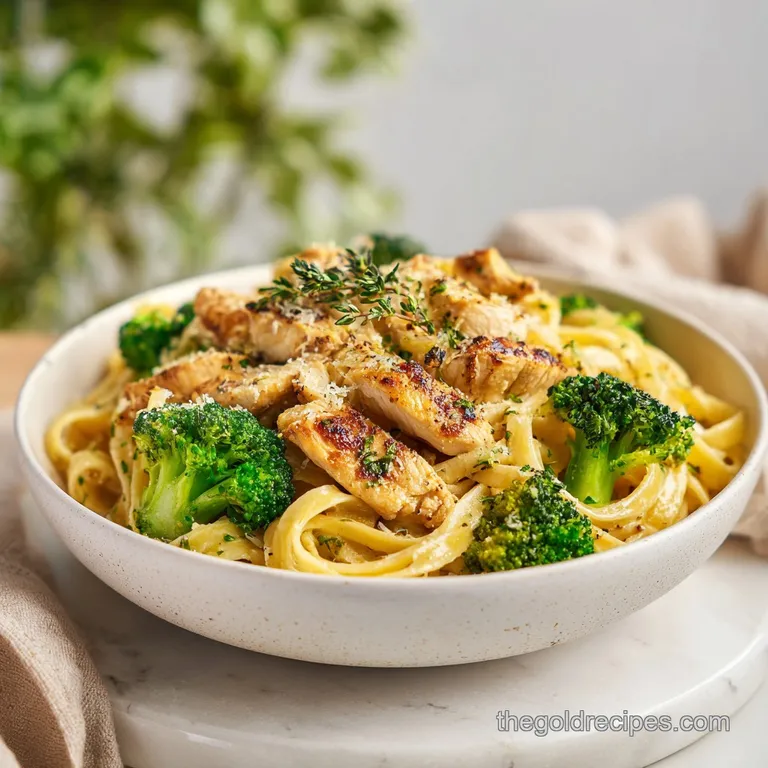
- Time: Active 10 minutes, Passive 15 minutes, Total 25 minutes
- Flavor/Texture Hook: Velvety sauce with crisp tender broccoli and savory garlic
- Perfect for: High protein meal prep or a fast weeknight fitness fuel
- Why High Protein Pasta Water and Cheese Work
- Component Analysis of the Recipe
- Sourcing Essential Elements for a Velvety Sauce
- Essential Tools for Achieving the Silky Emulsion
- Executing the Flash Steam and Garlic Infusion
- Fixing Sauce Separation and Texture Pitfalls
- Smart Swaps for Diverse Fitness Nutrition Goals
- Scaling for Different Batch Sizes
- Kitchen Wisdom and Myths
- Preserving Freshness for High Protein Meal Prep
- Enhancing Texture and Flavor Contrast During Plating
- Very High in Sodium
- Recipe FAQs
- 📝 Recipe Card
Why High Protein Pasta Water and Cheese Work
Starch Suspension: The high protein pasta, made from chickpeas or lentils, releases a specific type of starch into the boiling water that is stickier than traditional wheat starch.
When we add this reserved liquid back into the skillet, it acts as a bridge, allowing the fat from the Parmesan and the proteins in the cottage cheese to bind into a stable, velvety coating.
Thermal Stability: Blending the cottage cheese before heating it breaks down the curds into a uniform liquid, which prevents the sauce from looking "broken" or grainy when it hits the heat. This creates a texture that mimics a traditional roux based sauce but with triple the protein and half the fat.
Garlic Oil Infusion: By sautéing the minced garlic in extra virgin olive oil for exactly 60-90 seconds, we release the volatile oils and aromatics into the fat. This ensures every single strand of pasta is coated in a savory base before the creaminess is even added.
| Method | Time | Texture | Best For |
|---|---|---|---|
| One Pot Shortcut | 25 minutes | Uniformly coated | Busy weeknights/Gains |
| Traditional Bake | 45 minutes | Crispy top edges | Sunday family dinner |
| Cold Meal Prep | 10 minutes | Firm and chewy | Desk lunches |
Choosing the right cooking method depends entirely on your schedule, but the one pot shortcut used here is the most efficient for preserving the "snap" of the broccoli. The flash steaming technique ensures the florets don't turn into a mushy mess, which is a common disaster when people try to make "healthy" pasta.
1. The Starch Water Goldmine
Don't you dare pour that pasta water down the drain! It is literally liquid gold for this recipe. Because chickpea pasta is so high in protein, the water becomes cloudy and thick. This liquid is the secret to getting that velvety texture without using flour or cornstarch.
It creates a natural emulsion that holds the blended cottage cheese to the pasta.
2. The Rotisserie Shortcut Benefit
Using a pre roasted bird isn't just about saving time; it's about flavor. Rotisserie chickens are seasoned deeply, often through brining, which means the meat is already succulent and salty.
When you shred it and toss it into the garlic oil, it absorbs the red pepper flakes and pepper, making it taste far more complex than plain boiled chicken breast.
3. Flash Steaming for Texture
We aren't boiling the broccoli into oblivion. By tossing it into the pasta water for only the final 3 minutes, we are essentially using the pasta's heat to steam it.
This keeps the color a vibrant emerald and ensures the texture still has a slight "shatter" when you bite into it, contrasting perfectly with the soft, creamy noodles.
Component Analysis of the Recipe
| Ingredient | Science Role | Pro Secret |
|---|---|---|
| Cottage Cheese | Primary Protein Base | Blend it for 60 seconds until it looks like heavy cream to avoid a grainy texture. |
| Pasta Water | Emulsifying Agent | The high starch content from chickpea pasta acts as a glue for the sauce. |
| Parmesan Cheese | Flavor & Fat | Use freshly grated; pre shredded has cellulose that prevents a smooth melt. |
| Garlic Cloves | Aromatic Foundation | Add to cold oil and bring up to heat slowly to avoid bitter, burnt notes. |
The interaction between the acidic notes of the Parmesan and the neutral, milky base of the cottage cheese creates a balanced flavor profile that mimics a high end Alfredo. Understanding how these elements work together helps you avoid the common pitfalls of "healthy" cooking, where flavors often end up flat or textures become unappealing.
Sourcing Essential Elements for a Velvety Sauce
To make this Creamy High Protein Rotisserie Chicken Broccoli Pasta with Garlic, you need ingredients that can stand up to the heat without losing their nutritional integrity. We're looking for high-quality proteins and fresh produce to ensure the final dish doesn't taste like "diet food."
- 12 oz high protein chickpea or lentil pasta: Why this? Provides 11g of fiber and significantly more protein than white flour pasta.
- Substitute: Whole wheat pasta (similar fiber, but slightly less protein).
- 4 cups fresh broccoli florets: Why this? Adds volume and a necessary crunch to contrast the soft pasta.
- Substitute: Sliced zucchini or asparagus spears.
- 2 cups rotisserie chicken breast, shredded: Why this? The ultimate time saver that delivers pre seasoned, tender protein.
- Substitute: Leftover grilled chicken or canned chicken (drained).
- 1 cup low-fat cottage cheese: Why this? Becomes a velvety sauce when blended, providing the base for our gains.
- Substitute: Greek yogurt (will be tangier) or Silken tofu (for a dairy-free vibe).
- 0.5 cup freshly grated Parmesan cheese: Why this? Adds the salty, umami kick that makes the sauce feel indulgent.
- Substitute: Nutritional yeast (for a nutty, vegan friendly flavor).
- 4 cloves garlic, minced: Why this? The aromatic powerhouse that defines the savory profile of the dish.
- Substitute: 1 tsp garlic powder (in a pinch, but fresh is better).
- 1 tbsp extra virgin olive oil: Why this? Used to bloom the garlic and red pepper flakes for maximum flavor.
- Substitute: Avocado oil or butter.
- 1 tsp red pepper flakes: Why this? Provides a subtle heat that cuts through the richness of the cheese.
- Substitute: A pinch of cayenne pepper.
- 1 tsp freshly cracked black pepper: Why this? Essential for depth; freshly cracked has more volatile oils.
- Substitute: White pepper for a more subtle heat.
- 1 tbsp sea salt: Why this? For the pasta water; essential for seasoning the noodles from the inside out.
- Substitute: Kosher salt.
- 0.5 cup reserved starchy pasta water: Why this? The "glue" that binds the sauce to the pasta noodles.
- Substitute: Low sodium chicken broth (but you'll lose the starch benefit).
For more high protein inspiration, you might enjoy my Garlic Parmesan Chicken which uses a similar flavor profile but focuses on the poultry as the star. Both recipes are focused on maximizing flavor without the heavy fats of traditional cream sauces.
Essential Tools for Achieving the Silky Emulsion
You don't need a professional kitchen, but a few specific tools make this recipe a breeze. The most important is a high speed blender or an immersion blender. If you don't blend the cottage cheese properly, your sauce will be lumpy, and that's the fastest way to ruin the experience.
A large, deep skillet or a wide sauté pan is also vital. You need enough surface area to toss the pasta and broccoli with the sauce without everything flying out of the pan.
I prefer using a stainless steel pan because it allows for a bit of "fond" (those little brown bits) to develop if you sauté the garlic and chicken together, adding more depth.
Finally, a good microplane or fine grater for the Parmesan is a must. The smaller the cheese shreds, the faster they will melt into the sauce. If the cheese is too thick, it might clump instead of creating that velvety finish we are after.
Executing the Flash Steam and Garlic Infusion
- Bring a large pot of water to a rolling boil and add the 1 tbsp of sea salt. Add the 12 oz of high protein pasta. Note: Salted water is the only chance to season the pasta itself.
- Set a timer for 3 minutes less than the package instructions for al dente. Note: We finish cooking the pasta in the sauce later.
- Place the 1 cup of cottage cheese into a blender. Blend on high for 60 seconds until it looks exactly like heavy cream.
- While the pasta boils, heat the 1 tbsp of olive oil in a large skillet over medium heat. Add the 4 cloves of minced garlic and 1 tsp of red pepper flakes.
- Sauté the garlic for 60-90 seconds until the aroma fills the kitchen and the garlic is pale gold. Turn the heat to low immediately.
- When the pasta timer has 3 minutes remaining, dump the 4 cups of broccoli florets directly into the boiling pasta water.
- Before draining, use a measuring cup to scoop out 0.5 cup of the cloudy, starchy pasta water. Drain the pasta and broccoli together.
- Add the 2 cups of shredded chicken to the skillet with the garlic oil. Toss for 30 seconds to warm through and coat in the oil.
- Pour the blended cottage cheese, the drained pasta and broccoli, and the 0.5 cup of Parmesan into the skillet.
- Toss everything together while slowly drizzling in the 0.5 cup of reserved pasta water until the sauce becomes velvety and coats every noodle.
- Season with the 1 tsp of black pepper and serve immediately while the emulsion is at its peak.
Fixing Sauce Separation and Texture Pitfalls
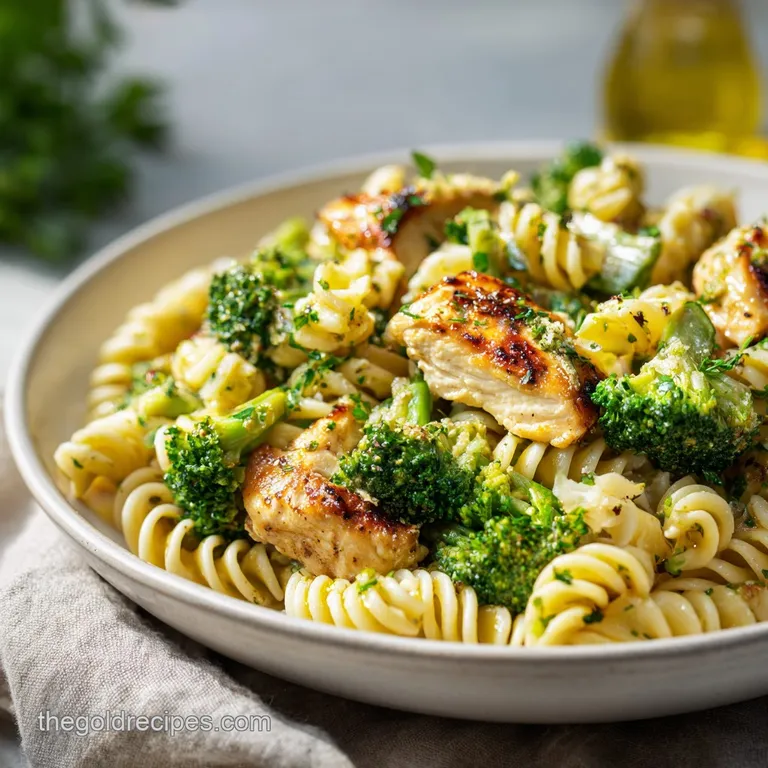
One of the biggest issues people have with high protein sauces is that they can "break." Because cottage cheese is high in protein and lower in fat than heavy cream, it doesn't have the same natural stability.
If the heat is too high when you add the cheese, the proteins can tighten up and squeeze out the liquid, leading to a watery, grainy mess.
1. The Sauce "Curdling"
If you see little white specks or the liquid seems to be separating from the solids, your pan was likely too hot. The fix is simple: remove the pan from the heat immediately. Adding a tablespoon of cold water or a bit more of the reserved pasta water while whisking vigorously can often bring the emulsion back together.
2. Dry, "Chalky" Chicken
This usually happens if you use leftover chicken that has been reheated too many times. By using fresh rotisserie chicken and only adding it at the very end to "warm through" in the garlic oil, you keep the fibers tender.
If it still feels dry, make sure you are using a bit of the chicken juices from the bottom of the rotisserie container that's pure flavor.
| Problem | Root Cause | Solution |
|---|---|---|
| Grainy Sauce | Cottage cheese curds not fully blended | Process in blender for a full 60 seconds |
| Bland Flavor | Not enough salt in the pasta water | Use a full tablespoon of sea salt per gallon |
| Watery Bottom | Added too much pasta water at once | Drizzle water slowly while tossing the pasta |
Common Mistakes Checklist
- ✓ Never skip the blending step for the cottage cheese; it's the only way to get a velvety result.
- ✓ Don't boil the broccoli for more than 3 minutes or it will lose its vibrant color and snap.
- ✓ Ensure the garlic doesn't turn brown or dark; burnt garlic tastes bitter and will ruin the delicate sauce.
- ✓ Always reserve the pasta water before draining; plain tap water will not emulsify the sauce.
- ✓ Use freshly grated Parmesan, as the stuff in the green can won't melt properly into the sauce.
Smart Swaps for Diverse Fitness Nutrition Goals
If you are following a specific macro plan, this recipe is incredibly easy to scale or adapt. For those looking for even higher protein, you can swap the chickpea pasta for a lupini bean based pasta, which often has even fewer carbs.
If you're on a bulk and need more calories, adding a handful of toasted pine nuts or a drizzle of high-quality pesto at the end can provide healthy fats and a massive flavor boost.
1. High Protein Chicken Alfredo Bake
If you want to prep this for a family or a potluck, you can follow the instructions up to the point of mixing everything. Instead of serving immediately, transfer the mixture to a 9x13 baking dish.
Sprinkle an extra 0.25 cup of Parmesan on top and broil for 3-5 minutes until the top is bubbly and has golden spots. This adds a "shatter" texture to the top layer that is absolutely addictive.
2. dairy-free Swap
For a dairy-free version, you can substitute the cottage cheese with a blend of soaked cashews and nutritional yeast. While the protein profile will change, the creaminess remains. If you go this route, check out my Chicken in 30 Minutes recipe for ideas on how to build deep flavors without traditional dairy bases.
Scaling for Different Batch Sizes
When scaling this recipe down for one person (1/4 batch), be careful with the garlic and red pepper flakes. Spices don't always scale linearly; 1 clove of garlic for a single serving is usually plenty. You can still use the same flash steaming method, but you'll only need a small pot and a small skillet.
When scaling up for a party (2x or 4x batch), the biggest challenge is the pan size. You will likely need to work in batches or use a massive Dutch oven to toss everything together. When doubling the recipe, only use 1.5x the amount of red pepper flakes and salt initially, then taste and adjust.
Too much heat can quickly overpower the delicate creaminess of the cottage cheese.
Kitchen Wisdom and Myths
There is a common myth that you should add oil to your pasta water to keep the noodles from sticking. This is a total waste of olive oil! The oil just floats on top and then gets poured down the drain. Even worse, it coats the pasta in a slick film that prevents our velvety high protein sauce from sticking.
Instead, just make sure you use a large enough pot and stir the pasta for the first 60 seconds of boiling.
Another myth is that "fat free" is always better for fitness. While we use low-fat cottage cheese here, the small amount of fat in the Parmesan and the extra virgin olive oil is actually essential. Fat carries flavor and helps your body absorb the fat soluble vitamins in the broccoli.
Without that 16g of fat per serving, the dish would taste "thin" and wouldn't be as satisfying, leading to cravings later.
Preserving Freshness for High Protein Meal Prep
This Creamy High Protein Rotisserie Chicken Broccoli Pasta with Garlic is a meal prep superstar. In the fridge, it will stay fresh and delicious for up to 4 days in an airtight container.
The sauce may thicken as it cools, so when you reheat it, I recommend adding a splash of water or chicken broth to loosen it back up to that velvety consistency.
As for the freezer, this dish can be frozen for up to 2 months. However, be aware that the texture of the broccoli will change slightly after thawing, becoming a bit softer. To reheat from frozen, let it thaw in the fridge overnight and then warm it in a skillet over medium low heat, adding a bit of liquid to restore the emulsion.
Zero Waste Tip: Don't throw away the broccoli stems! Peel the tough outer skin with a vegetable peeler, dice the tender interior, and toss them into the boiling water with the florets. They have a wonderful sweetness and add an extra crunch that most people miss out on.
Enhancing Texture and Flavor Contrast During Plating
The key to a restaurant level experience at home is the contrast of flavors. This dish is rich and savory, so it benefits greatly from a "bright" finishing touch. A squeeze of fresh lemon juice right before serving can cut through the creaminess of the cottage cheese and make the garlic notes sing.
1. The Acidic Counterpoint
If you want to go the extra mile, a few pickled red onions on top add a beautiful pink color and a vinegary snap that balances the 55g of protein richness. The "Flavor Map" for this dish is all about those contrasts: the earthy chickpea pasta, the savory chicken, the spicy pepper flakes, and the bright lemon or vinegar finish.
2. Better Than Dining Out
Pair this with a simple side salad of arugula and a balsamic vinaigrette. The peppery bite of the arugula is the perfect companion to the garlic heavy pasta. For a complete meal, I often serve this with a chilled glass of sparkling water with a lime wedge it cleanses the palate between bites of that velvety, cheesy goodness.
By following these tips, you aren't just making dinner; you're building a meal that fuels your fitness goals without ever feeling like a chore. The combination of shortcut rotisserie chicken and scientific sauce building makes this a recipe you'll reach for week after week.
Right then, it's time to get that water boiling your gains are waiting!
Very High in Sodium
840 mg 840 mg (37% 37% of daily value)
The American Heart Association recommends limiting sodium intake to no more than 2,300mg per day, with an ideal limit of 1,500mg per day for most adults.
Tips to Reduce Sodium
-
Eliminate Added Salt in Pasta Water-25%
The 1 tablespoon of sea salt added to the pasta water is a significant sodium contributor. Omitting it entirely will dramatically reduce sodium without affecting the pasta's texture.
-
Reduce Parmesan Cheese-15%
Parmesan cheese is quite high in sodium. Halving the amount to 0.25 cups will still provide a cheesy flavor while cutting down on sodium.
-
Choose Unseasoned Rotisserie Chicken-10%
Many rotisserie chickens are pre-seasoned with salt. Opt for a plain or low-sodium rotisserie chicken, or poach your own chicken breast to control sodium levels.
-
Boost Flavor with Herbs and Spices
Instead of relying on salt, enhance the dish's flavor by using a generous amount of fresh or dried herbs like basil, oregano, or parsley, and additional garlic or onion powder.
-
Opt for Low-Sodium Cottage Cheese-5%
While blended, cottage cheese can still contribute sodium. Look for a 'low-sodium' or 'no salt added' variety when purchasing.
Recipe FAQs
Is it true I must boil the broccoli for a long time to get it soft?
No, this is a common misconception. You only need to flash steam the broccoli for 3 minutes in the pasta water to maintain its vibrant color and essential snap.
Can I use pre-grated Parmesan from a bag?
No, stick to freshly grated Parmesan. The pre-grated varieties contain anti caking agents that prevent the cheese from melting into the smooth, silky emulsion required for this sauce.
How to ensure the cottage cheese sauce remains velvety?
Blend the cottage cheese completely until smooth before adding it to the skillet. If you skip this blending step, the texture will remain grainy instead of achieving the desired creaminess.
How to fix a sauce that looks too thick or separated?
Add the reserved starchy pasta water one tablespoon at a time while tossing continuously. The starch in the water is the secret to binding the fats and cheese into a cohesive, restaurant quality sauce.
Is it necessary to save the pasta water?
Yes, it is essential for the final texture. Plain tap water lacks the necessary starch to create a creamy emulsion; if you enjoyed mastering this emulsification technique, you will find it is just as critical for achieving a glossy finish in our other pasta dishes.
How to prevent the minced garlic from turning bitter?
Sauté the garlic for only 60-90 seconds until fragrant, then immediately lower the heat. Garlic burns quickly, and once it turns brown, it develops an unpleasant bitterness that ruins the delicate balance of the dish.
Can I cook the pasta ahead of time?
No, the recipe is best served immediately after tossing. High protein pasta absorbs liquid rapidly, so cooking and assembling it in the final 25-minute window ensures the best consistency for the sauce.
High Protein Chicken Broccoli Pasta
Ingredients:
Instructions:
Nutrition Facts:
| Calories | 568 calories |
|---|---|
| Protein | 55g |
| Fat | 16g |
| Carbs | 54g |
| Fiber | 11g |
| Sugar | 5g |
| Sodium | 840mg |
