Crispy Smashed Potatoes: Oven Baked
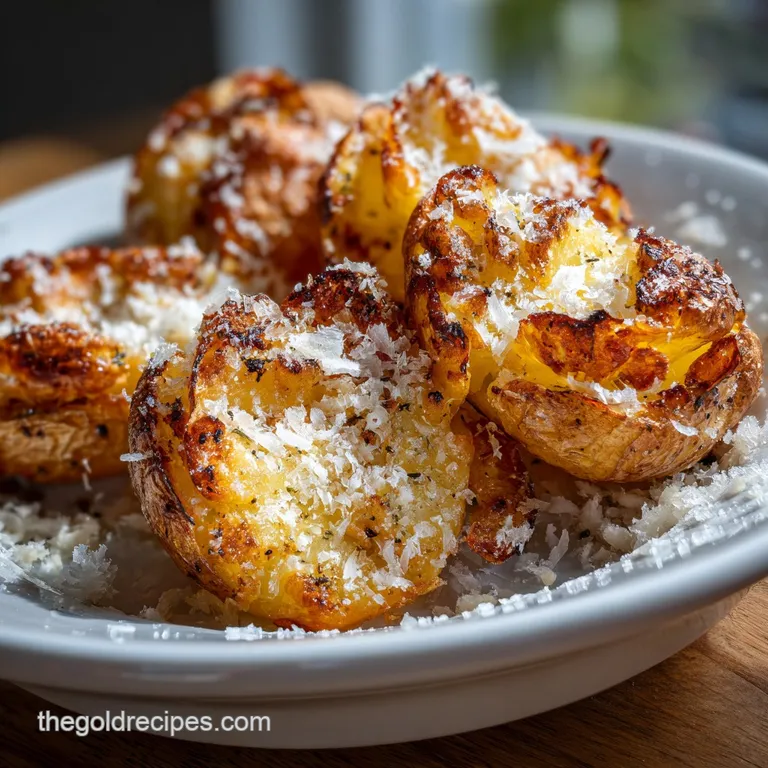
- Time: Active 15 mins, Passive 50 mins, Total 1 hours 5 mins
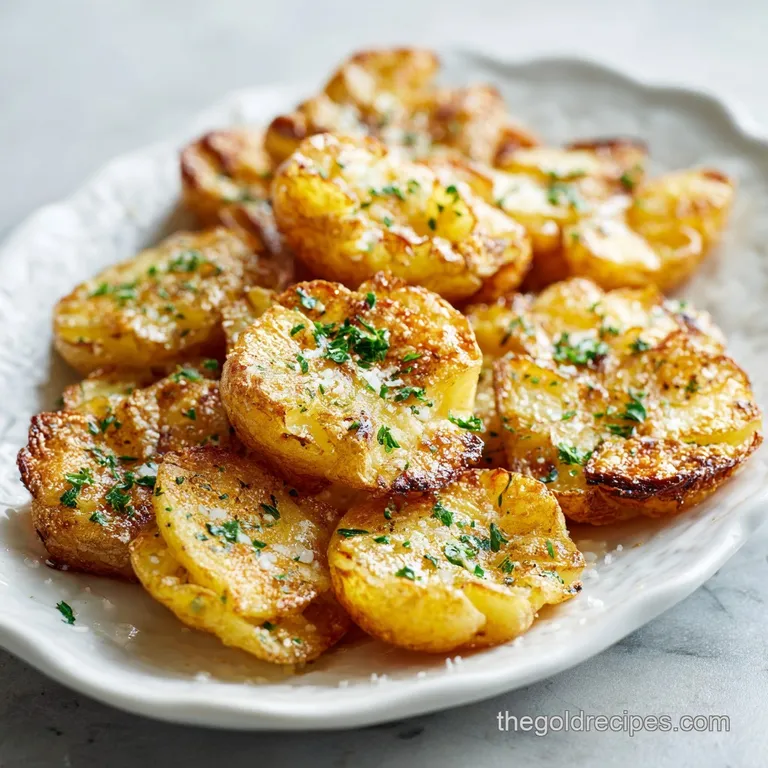
- Flavor/Texture Hook: Shatter crisp edges with a buttery, garlic infused interior
- Perfect for: High impact side dishes or viral worthy dinner party appetizers
- Decoding the Physics of Ultra Crispy Smashed Potatoes
- The Chemistry Behind Surface Area and Starch Gelatinization
- Essential Analysis of the Component Matrix
- Shopping List for Structural Success
- The Toolkit for Mechanical Smashing
- Executing the Multi Phase Thermal Transformation
- Solving Common Failure Modes in the Roasting Phase
- Modifying Macros Without Sacrificing Structural Integrity
- Preserving the Crunch Factor During Reheating Cycles
- Curating the Best Chemical Pairings for Roasted Potatoes
- Recipe FAQs
- 📝 Recipe Card
Decoding the Physics of Ultra Crispy Smashed Potatoes
The first time I attempted this viral sensation, I ended up with a tray of lukewarm, mushy potato pucks that lacked any structural integrity. I could hear the sizzle, but the "shatter" I was looking for was nowhere to be found. It was a failure of physics, plain and simple.
I had ignored the surface moisture and the thermal limitations of my oil, resulting in a steamed potato rather than a roasted one.
That failure sent me into a kitchen hacker spiral. I began analyzing the starch structure of the Yukon Gold and how mechanical smashing affects heat distribution. What I discovered changed everything: the secret isn't just in the oven temperature, but in the deliberate dehydration of the potato skin before it even touches the fat.
Now, when I pull these out of the oven, the aroma of toasted garlic and smoked paprika fills the room, and the sound of that first fork crack is pure culinary chemistry in action.
We aren't just making a side dish here; we are executing a multi stage dehydration and Maillard reaction project. By the time you finish this guide, you’ll understand exactly how to manipulate heat and starch to get that golden brown armor that stays crispy even after it hits the dinner table.
Let's decode the process and ensure you never serve a soggy potato again.
The Chemistry Behind Surface Area and Starch Gelatinization
To achieve the ultimate crunch, we have to hack the potato's cellular structure through a process called starch gelatinization followed by retrogradation.
- Mechanical Surface Expansion: Smashing the potato increases the surface area by nearly 300%, creating "craggy" valleys that trap oil for maximum heat transfer.
- Starch Migration: Parboiling in salted water draws starch to the surface, where it dries into a thin, glue like layer that eventually dehydrates into a shatter crisp crust.
- Vapor Release Logic: Allowing the potatoes to "steam dry" after boiling prevents the oil from being cooled by excess water, ensuring a over high heat sear instead of a soggy steam.
Decision Matrix: Stovetop vs Oven Performance
| Method | Time | Texture | Best For |
|---|---|---|---|
| Stovetop Skillet | 20 mins | Deeply seared but less uniform | Small batches (1-2 servings) |
| over High heat Oven | 50 mins | Uniformly shatter crisp edges | Large groups and consistent results |
| Air Fryer | 15 mins | Extra dry and crunchy | Speed and energy efficiency |
Choosing the oven method allows for the most consistent thermal environment, which is vital when you are processing 1.5 lbs of potatoes at once. It provides the convection needed to wick away moisture from every nook and cranny of those smashed edges.
Essential Analysis of the Component Matrix
Understanding your raw materials is the first step in error prevention. We aren't just grabbing "any potato" from the bin; we are looking for specific starch to sugar ratios.
| Ingredient | Science Role | Pro Secret |
|---|---|---|
| Baby Yukon Golds | High amylopectin content | They hold their shape during the smash while remaining velvety inside. |
| Avocado Oil | High smoke point (520°F) | This allows for over high heat roasting without the oil breaking down or smoking. |
| Fine Sea Salt | Osmotic pressure agent | Using this in the boiling water seasons the potato to the core via osmosis. |
Why Is the Steam Dry Step Mandatory?
If you smash a wet potato, the water trapped in the crevices will turn to steam in the oven. This creates a barrier between the potato and the oil, preventing the Maillard reaction (browning) from occurring efficiently. By letting them sit for five minutes after draining, you allow the surface moisture to evaporate.
This "hacker" move is the difference between a potato that crunches and one that merely bends.
Shopping List for Structural Success
You need to be precise with your sourcing to ensure the chemistry of the dish holds up under high heat.
- 1.5 lbs Baby Yukon Gold Potatoes: Why this? Their waxy creamy balance prevents the "shatter to dust" failure of Russets.
- Substitute: Red bliss potatoes (Adds a slightly snappier skin texture).
- 2 tbsp Avocado Oil: Why this? It handles 425°F+ temperatures without oxidizing into bitter flavors.
- Substitute: Ghee or clarified butter (Adds a nutty, toasted dairy aroma).
- 1 tsp Garlic Powder: Why this? Fresh garlic often burns at high roasting temps; powder provides uniform infusion.
- Substitute: Granulated onion (Provides a similar savory depth).
- 0.5 tsp Smoked Paprika: Why this? Adds a chemical "smoke" note that mimics a wood fired oven.
- Substitute: Chipotle powder (Increases the heat to smoke ratio).
- 1 tbsp Fine Sea Salt: For the boiling water to ensure deep seasoning.
- 0.5 tsp Flaky Sea Salt: For the final texture and "salt crunch" finish.
- 1 tbsp fresh chives or parsley: To provide a bright, acidic contrast to the heavy fats.
The Toolkit for Mechanical Smashing
Don't overcomplicate the gear, but you do need tools that can handle the pressure of the "smash" phase.
- Heavy Rimmed Baking Sheet: Use a heavy gauge pan like a Nordic Ware half sheet. Thin pans warp at 450°F, leading to uneven oil distribution.
- Flat Bottomed Glass or Mason Jar: This is the best "mechanical hacker" tool for smashing. The transparent bottom lets you see exactly how much you are crushing the potato.
- Large Stockpot: You need enough water volume to maintain a boil when 1.5 lbs of potatoes are added.
- Colander: For the critical "steam dry" dehydration phase.
Chef's Tip: Freeze your avocado oil for 10 minutes before whisking it with the spices. This creates a slightly thicker emulsion that clings to the craggy potato edges rather than just pooling at the bottom of the pan.
Executing the Multi Phase Thermal Transformation
Follow these precision steps to ensure your Crispy Smashed Potatoes hit the mark.
- Boil water. Fill a large pot with water and add the 1 tbsp fine sea salt. Note: The water should taste like the sea to properly season the potato interiors.
- Parboil potatoes. Add 1.5 lbs Baby Yukon Golds. Simmer for 15-20 minutes until a knife slides in with zero resistance.
- Steam dry. Drain potatoes in a colander and let them sit for 5 minutes. Wait until the skins look dull and matte.
- Preheat oven. Set your oven to 425°F. Place your baking sheet inside to preheat. Note: Adding potatoes to a hot pan jumpstarts the bottom crust formation.
- Prep oil mixture. In a small bowl, whisk 2 tbsp avocado oil, 1 tsp garlic powder, and 0.5 tsp smoked paprika.
- Perform the smash. Place potatoes on the hot baking sheet. Use a flat bottomed glass to press down until they are roughly 1/2 inch thick.
- Apply seasoning. Brush the oil mixture generously over the tops, ensuring it gets into the jagged cracks.
- Roast phase. Slide into the oven for 25-30 minutes. Flip halfway through to ensure bi lateral crispiness.
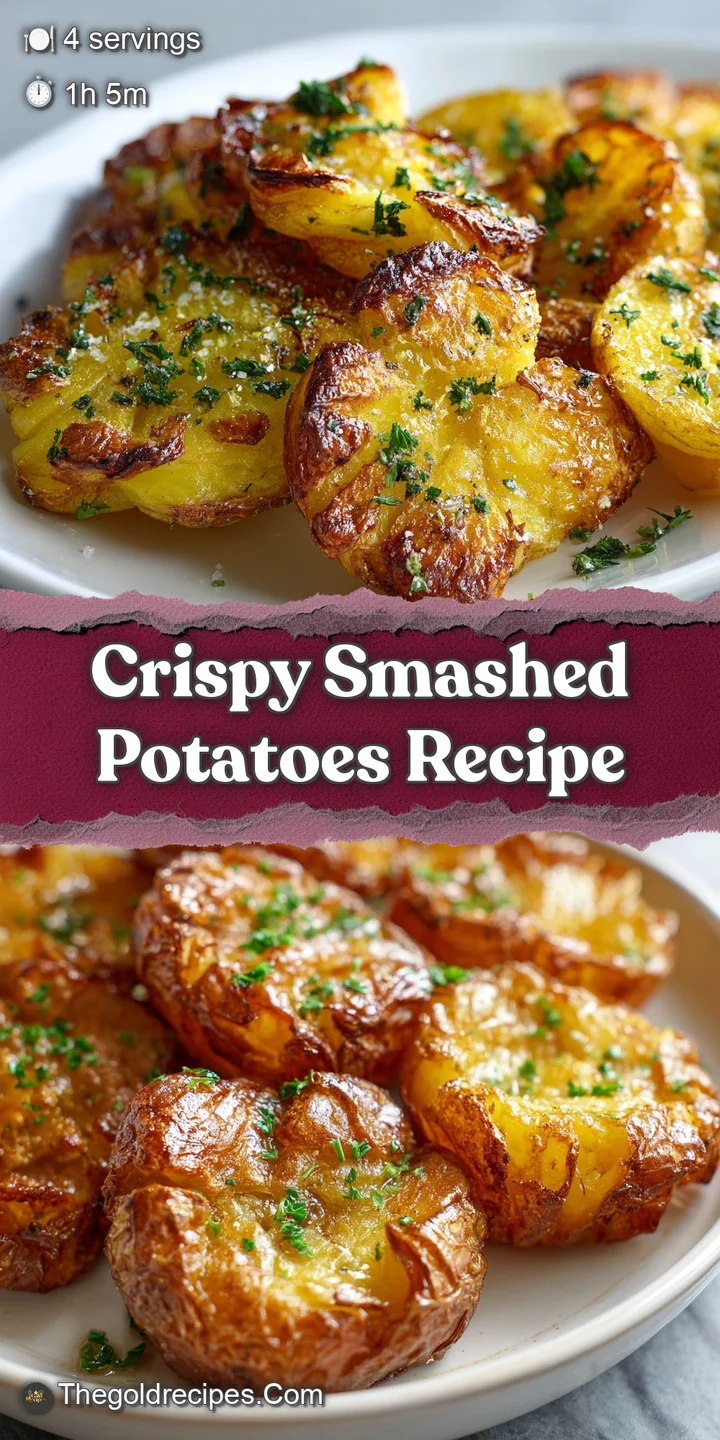
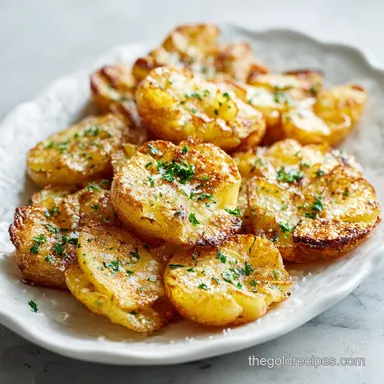
- Finish high. Roast for another 10-15 minutes until the edges are deep amber and shatter when touched.
- Garnish and serve. Sprinkle with 0.5 tsp flaky sea salt and 1 tbsp chopped chives.
Solving Common Failure Modes in the Roasting Phase
Even with a solid plan, variables like oven calibration and potato moisture can cause issues. Let's decode the fixes.
Why Your Smashed Potatoes Aren't Crispy
The most common reason for a "soft" smashed potato is overcrowding. When potatoes are too close together, the moisture escaping from one potato is trapped by its neighbor, creating a micro climate of steam.
Why the Potatoes Shattered into Pieces
If your potatoes turned into a pile of crumbs instead of a cohesive puck, they were likely over boiled. The pectin that holds the cells together breaks down too far if boiled past the 20 minute mark.
| Problem | Root Cause | Solution |
|---|---|---|
| Greasy/Oily finish | Oven temp too low | Increase heat to 450°F; the oil should sizzle immediately. |
| Burned garlic flavor | Using fresh garlic too early | Switch to garlic powder for the roast; save fresh garlic for the garnish. |
| Potato sticks to glass | Vacuum seal/moisture | Lightly oil the bottom of your smashing glass before each press. |
Common Mistakes Checklist
- ✓ Pat the potatoes dry with a paper towel if they still look shiny after the 5 minute rest.
- ✓ Never use a "low-fat" spray; you need the 2 tbsp of oil to conduct heat into the potato valleys.
- ✓ Avoid Russet potatoes for this specific recipe; their starch structure is too "fluffy" to hold the smashed shape.
- ✓ Ensure the baking sheet is preheated; this prevents the bottom of the potato from sticking.
- ✓ Don't skip the flip; the side touching the pan is always the crunchiest.
Modifying Macros Without Sacrificing Structural Integrity
Scaling this recipe requires a basic understanding of heat distribution. If you double the batch, you cannot simply double the time.
- Scaling Up (2x): Use two separate baking sheets. If you crowd them onto one, you will end up with "Smashed Steamed Potatoes." Rotate the pans between the top and bottom racks halfway through the cook time.
- Scaling Down (0.5x): Reduce the boiling time by 3-5 minutes as smaller volumes of water return to a boil faster.
Precision Checkpoints for Success
- Weight Check: Ensure all potatoes are roughly the same size (about the size of a golf ball) for even cooking.
- Time Check: 18 minutes is usually the "sweet spot" for parboiling baby Yukons.
- Visual Check: The edges should look like "lace" or "shards" before you pull them from the oven.
How Can I Make This Keto Friendly?
While potatoes are inherently high carb, you can hack the insulin response by allowing the potatoes to cool completely after boiling (overnight is best). This creates resistant starch, which lowers the glycemic index. Then, proceed with the smashing and roasting steps as usual.
Preserving the Crunch Factor During Reheating Cycles
Storing these is easy, but reheating them requires a "re dehydration" strategy.
- Fridge Storage: Keep in an airtight container for up to 4 days. They will lose their crunch as the starch absorbs moisture from the air.
- Freezer Instructions: You can freeze the potatoes after the smash but before the second roast. Lay them flat on a tray to flash freeze, then bag them.
- The Reheat Hack: Never use a microwave. It vibrates water molecules, turning your crispy armor into a soggy mess. Use an air fryer at 400°F for 5 minutes or a toaster oven to re crisp the edges.
Zero Waste Strategy
Don't toss the tiny potato shards that break off during the smash. Roast them right alongside the main pucks. These "potato croutons" are the crunchiest bits and make a brilliant topping for salads or bowls the next day.
Curating the Best Chemical Pairings for Roasted Potatoes
Crispy Smashed Potatoes are chemically rich in fat and salt, meaning they need acidity and umami to balance the palate.
- The Acid Hit: Serve with a lemon tahini drizzle or a side of malt vinegar. The acid cuts through the avocado oil, refreshing your taste buds between bites.
- The Umami Bomb: Grate fresh Parmesan over the potatoes in the last 5 minutes of roasting. The cheese will melt into the crevices and create a lacy, salty crust.
- The Viral Dip: Mix Greek yogurt with lemon zest and plenty of black pepper. The cool, creamy texture contrasts the hot, shatter crisp potato edges perfectly.
Debunking Starch Myths
One common myth is that you should soak potatoes in cold water after boiling to "stop the cooking." In this recipe, that is a tactical error. We want the carryover heat to assist in the steam drying process. Rinsing them introduces new moisture that we would then have to work twice as hard to remove in the oven.
Another misconception is that the "smash" is just for looks. In reality, the smash creates mechanical damage to the surface cells, releasing more starch and creating more surface area for the Maillard reaction. It's a functional step, not just an aesthetic one.
Trust the chemistry, embrace the shatter, and enjoy the most technically proficient potatoes you've ever made.
Recipe FAQs
How to make your potatoes crispy in the oven?
Preheat your baking sheet inside the oven at 425°F. Add the potatoes to the hot pan right before seasoning, as starting them on a hot surface immediately jumpstarts the bottom crust formation.
What temperature do you cook smashed potatoes at in the oven?
Start the roast at 425°F. For maximum crispness, you can finish the final 10-15 minutes at 450°F once the potatoes are mostly cooked through.
What is the secret to crispy roasted potatoes?
Thoroughly steam dry the potatoes after boiling, then use high heat. Allowing the boiled potatoes to sit for five minutes ensures surface moisture evaporates, preventing the potato from steaming itself in the oven.
Why won't my potatoes get crispy in the oven?
You likely introduced moisture or overcrowded the pan. Excess water cools the oil, and too many potatoes in one pan trap steam, which prevents proper dehydration and browning.
What is the critical step before smashing the boiled potatoes?
Let them sit in a colander for five minutes after draining. This crucial steam dry period allows surface moisture to wick away, preparing the starch for a hard sear rather than a gentle steam.
Is it true I should use Russet potatoes for the best crunch?
No, this is a common misconception. Russet potatoes have a high starch content that causes them to fall apart easily during the smash; use Yukon Golds for better structural integrity.
How should I season the potatoes for deep flavor?
Season them twice: once in the boil and once with oil before roasting. Boil them in heavily salted water to season the core, and then brush with high smoke-point oil mixed with powdered spices.
Crispy Smashed Potatoes Guide
Ingredients:
Instructions:
Nutrition Facts:
| Calories | 197 kcal |
|---|---|
| Protein | 3.6 g |
| Fat | 7.2 g |
| Carbs | 29.8 g |
| Fiber | 3.8 g |
| Sugar | 1.4 g |
| Sodium | 485 mg |
