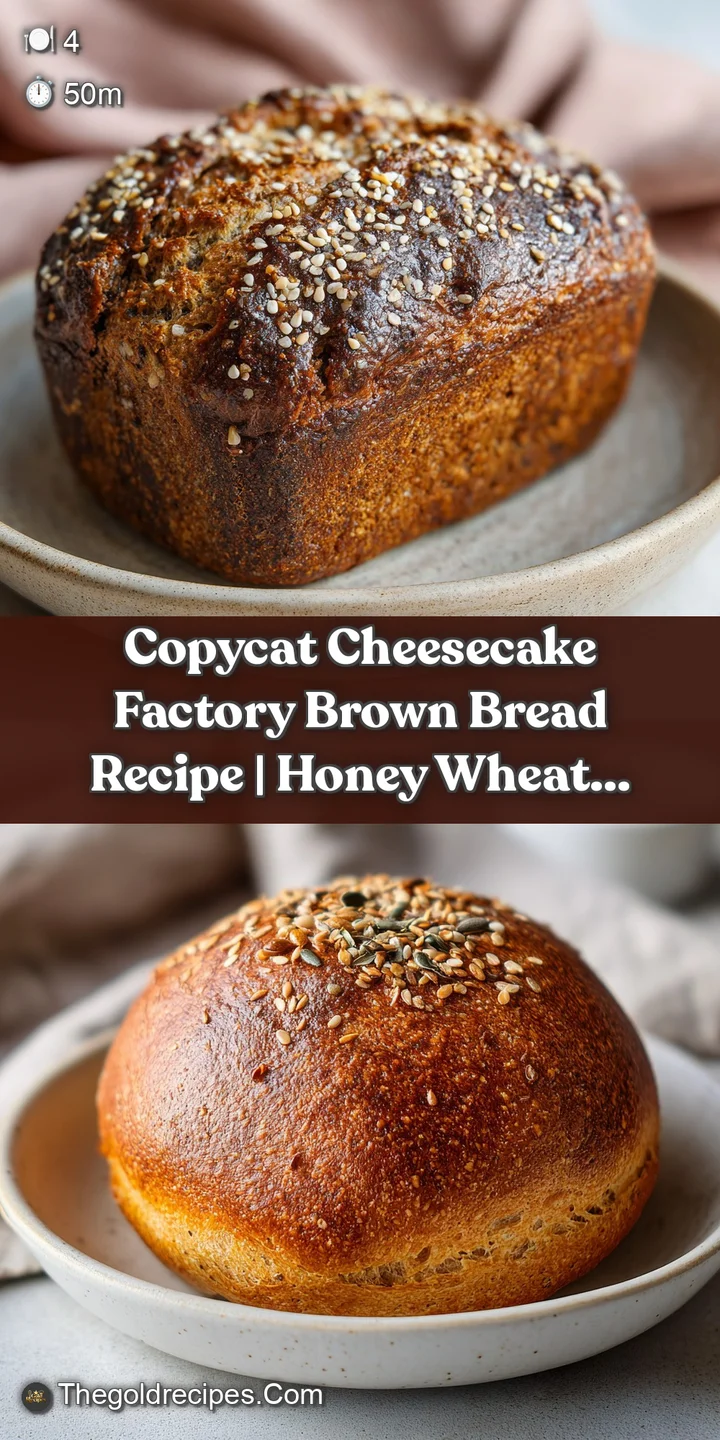
Copycat Cheesecake Factory Brown Bread Recipe

- Time: Active 25 minutes, Passive 2 hours 35 mins, Total 3 hours
- Flavor/Texture Hook: Earthy, honey sweetened, and incredibly soft
- Perfect for: Replicating the full restaurant experience at home
- Decoding the copycat cheesecake factory brown bread
- Vital Performance and Time Metrics
- Component Breakdown and Flavor Hacking
- Essential Lab Tools for Baking
- Executing the Systematic Bread Build
- Resolving Texture and Color Deviations
- Scaling for Large Groups
- Alternative Diet Swaps
- Preservation and Waste Management Strategies
- Authenticity and Service Logistics
- Common Myths About Factory Bread
- High in Sodium
- Recipe FAQs
- 📝 Recipe Card
Decoding the copycat cheesecake factory brown bread
The second that warm, earthy aroma of molasses and cocoa hits your kitchen, you'll know you've cracked the code. I remember the first time I tried to hack this recipe; I ended up with a loaf that looked like a brick and tasted like a burnt chocolate bar.
It took three different iterations to realize that the secret isn't just the color, but the specific moisture retention provided by the honey and molasses working in tandem.
When you tear into a fresh loaf, the crust should barely resist, giving way to a velvety, mahogany interior that smells like a mix of dark sugar and faint coffee. We aren't just making "brown bread" here; we are engineering a specific crumb structure that stays "squishy" even after it cools.
This version uses espresso powder to sharpen the darker notes without adding bitterness, ensuring every bite is exactly what you expect when you sit down at that booth.
We have stripped away the guesswork and focused on the variables that actually matter: hydration levels and yeast activity. This isn't about fancy techniques; it's about understanding how these ingredients interact to create that signature restaurant profile.
You'll get four mini baguettes out of this, which is ideal because, let's be honest, one loaf is never enough once the salted butter comes out.
Vital Performance and Time Metrics
The Molecular Mahogany Hack
The specific depth of color in this factory brown bread comes from a synergistic reaction between unsulphured molasses and unsweetened cocoa powder. While the cocoa provides the base pigment, the espresso powder acts as a flavor catalyst, deepening the perceived richness without making the bread taste like a mocha.
This combination creates a complex, earthy profile that simple brown sugar cannot replicate.
Hygroscopic Moisture Retention: Honey and molasses are both humectants, meaning they actively pull moisture from the air into the bread. This mechanism ensures the crumb remains tender and prevents the starch from recrystallizing too quickly, which is why this bread stays soft longer than standard white loaves.
| Method | Total Time | Texture | Best For |
|---|---|---|---|
| Traditional Oven | 3 hours | Crispy crust, soft center | Authentic restaurant feel |
| Bread Machine | 2 hours 15 mins | Consistent, uniform crumb | Hands off daily prep |
| Dutch Oven | 3 hours 10 mins | Thick, rustic crust | Hearty soup pairings |
Every baker needs a reliable sweet bread in their rotation, and while this loaf is savory adjacent, it shares some structural similarities with my Starbucks Pumpkin Bread recipe regarding how we manage moisture and density. The goal is a bread that feels substantial but melts away as soon as you start chewing.
Component Breakdown and Flavor Hacking
| Ingredient | Science Role | Pro Secret |
|---|---|---|
| Bread Flour | High protein (12-14%) creates the gluten network | Don't swap for AP; you need the strength to lift the heavy molasses |
| Molasses | Adds acidity to activate yeast and provides deep color | Use unsulphured only; blackstrap is too bitter for this profile |
| Espresso Powder | Flavor catalyst that enhances cocoa notes | A tiny amount darkens the dough without adding caffeine jitters |
| Whole Wheat Flour | Adds bran for texture and earthy flavor | Sift it if you want an even finer, more commercial crumb |
The Core Essentials
- 1 cup warm water (240ml): Why this? Hydrates the flour and wakes up the yeast at 105°F.
- 2 tbsp honey (42g): Why this? Provides fermentable sugar and keeps the bread moist.
- 2.25 tsp active dry yeast (7g): Why this? The engine of the rise; ensure it is fresh.
- 0.25 cup unsulphured molasses (85g): Why this? The primary flavor and color driver for the recipe.
- 3 tbsp unsalted butter, softened (42g): Why this? Tenderizes the crumb by coating gluten strands.
- 2 cups bread flour (260g): Why this? Provides the necessary structure for a high rise loaf.
- 1.5 cups whole wheat flour (195g): Why this? Gives the bread its signature rustic, nutty bite.
- 1 tbsp unsweetened cocoa powder (7g): Why this? Purely for that deep, dark mahogany aesthetic.
- 1 tsp espresso powder: Why this? Sharpens the earthy molasses notes without bitterness.
- 1.5 tsp fine sea salt (9g): Why this? Regulates yeast and prevents the loaf from being bland.
- 0.25 cup old fashioned rolled oats: Why this? The iconic textural topping for the crust.
- 1 tbsp cornmeal: Why this? Prevents sticking and adds a crunch to the base.
Chef's Tip: Freeze your butter for 10 minutes then grate it into the flour if it’s not soft enough. This ensures it distributes evenly without clumping the dough.
Essential Lab Tools for Baking
To get that specific restaurant shape, you don't need fancy molds, but a few specific tools make the process much more precise. I always use a digital scale because measuring flour by the cup is a gamble that usually leads to dry, crumbly bread.
A bench scraper is also your best friend here for dividing the dough into four even portions without tearing the gluten.
If you have a stand mixer (such as a KitchenAid), use the dough hook to save your arms, but this dough is actually quite therapeutic to knead by hand. You'll also need a large baking sheet and some parchment paper.
The cornmeal is vital for the bottom of the loaves; it creates a tiny air gap that prevents the bottom from burning before the center is cooked through.
The shaping process is where most people stumble. You want to aim for "mini baguettes" or long ovals. If they are too round, they won't bake evenly in the 25 minute window. If you've ever mastered the shaping for a Levain Cookie Copycat recipe, you'll know that volume and surface area matter immensely for heat distribution.
Executing the Systematic Bread Build
For the Yeast Bloom
- Combine water and honey. Stir the 2 tbsp honey into the 1 cup warm water until dissolved. Note: Water should be roughly 105°F to avoid killing the yeast.
- Activate the yeast. Sprinkle 2.25 tsp active dry yeast over the water and let it sit for 5-10 minutes until it becomes foamy and fragrant.
For the Dough Base
- Whisk dry components. In a large bowl, combine 2 cups bread flour, 1.5 cups whole wheat flour, 1 tbsp cocoa, 1 tsp espresso powder, and 1.5 tsp sea salt.
- Incorporate wet ingredients. Add the yeast mixture, 0.25 cup molasses, and 3 tbsp softened butter to the dry ingredients. Note: Use a sturdy wooden spoon until the dough starts to clump together.
For the Development Phase
- Knead the dough. Transfer to a floured surface and knead for 8-10 minutes until the dough is smooth, elastic, and slightly tacky.
- First rise. Place in a greased bowl, cover with a damp cloth, and let rise in a warm spot for 1.5 to 2 hours until doubled in size.
For Shaping and Finishing
- Divide and shape. Punch down the dough and divide into 4 equal pieces. Roll each into a 6 inch long oval or mini baguette shape.
- Add the topping. Mist the loaves lightly with water, then roll them in the 0.25 cup oats until the tops are well coated.
- Second rise. Place on a baking sheet dusted with 1 tbsp cornmeal. Cover and let rise for 45 minutes until noticeably puffy and light.
- Bake and cool. Bake at 350°F (180°C) for 20-25 minutes until the crust is firm and sounds hollow when tapped. Cool on a wire rack before slicing.
| Original Ingredient | Substitute | Why It Works |
|---|---|---|
| Honey | Maple Syrup | Provides similar sugar content. Note: Adds a slight woody flavor. |
| Butter | Coconut Oil (Solid) | Matches the fat ratio. Note: Loaf may have a subtle coconut scent. |
| Espresso Powder | Instant Coffee | Provides the same dark notes. Note: Use 1.5 tsp as it's less concentrated. |
Resolving Texture and Color Deviations
Why Your Bread Is Too Dense
If your copycat cheesecake factory brown bread feels like a paperweight, you likely over floured the surface during kneading or didn't let the yeast bloom properly. Whole wheat flour is heavier than white flour; if the yeast isn't at peak activity, it won't have the strength to lift that mass.
Always ensure your water isn't too hot, which can "scald" the yeast and prevent it from producing the gas needed for a light crumb.
Why Your Loaf Is Pale
A pale loaf usually indicates you used a "light" molasses or skipped the espresso powder. The mahogany color is a combination of the molasses acidity and the cocoa's pigment. If you find the color is still too light, check your oven temperature.
If the oven is too cool, the sugars won't caramelize (Maillard reaction), leaving you with a beige bread rather than the iconic dark brown.
| Problem | Root Cause | Solution |
|---|---|---|
| Dry Crumb | Too much flour added | Weigh ingredients; dough should be slightly tacky, not dry. |
| No Rise | Dead yeast or cold room | Check yeast expiration; proof in a turned off oven with a bowl of hot water. |
| Bitter Aftertaste | Too much espresso/cocoa | Stick to the 1 tbsp cocoa limit; it's for color, not chocolate flavor. |
Common Mistakes Checklist ✓ Don't skip the cornmeal on the pan; it provides the essential "restaurant" texture on the bottom. ✓ Ensure the butter is truly softened, not melted, to keep the crumb structure tender.
✓ Avoid over baking; the bread should reach an internal temp of 190°F to stay moist. ✓ Resist slicing the bread while it is piping hot, or the steam will escape and dry it out. ✓ Use bread flour specifically; all purpose lacks the protein needed for this specific rise.
Scaling for Large Groups
Scaling Down (Making 2 Loaves): To cut the recipe in half, use exactly 1.125 tsp of yeast (about half a packet). Reduce the kneading time by about 2 minutes since there is less mass to work with.
Use a smaller bowl for the rise so the dough can still "climb" the sides to build strength.
Scaling Up (Making 8 Loaves): When doubling, do not double the salt immediately; use 2.5 tsp instead of 3 to avoid over regulating the yeast. You may need to work in two separate batches for kneading unless you have a high capacity stand mixer.
Ensure your baking sheets are not overcrowded, as air needs to circulate around each mini baguette to set the crust.
Baking Adjustments: If you are baking 8 loaves at once on two different racks, rotate the pans halfway through the 25 minute timer. This prevents the bottom tray from staying pale while the top tray gets too dark.
Alternative Diet Swaps
For a Vegan Friendly Version
The only non vegan components here are the honey and butter. You can easily swap the honey for agave nectar or maple syrup 1:1. For the butter, use a high-quality vegan butter stick or solid coconut oil. Avoid liquid oils, as they change the crumb structure and can make the bread feel greasy rather than velvety.
For a Bread Machine Shortcut
This recipe adapts perfectly to a 1.5lb or 2lb bread machine. Add the liquids first, then the dry ingredients, and place the yeast in a small well on top. Use the "Basic" or "Whole Wheat" setting.
If you want the iconic baguette shape, use the "Dough" setting, then shape and bake in the oven as directed in the instructions section.
Preservation and Waste Management Strategies
Storage Guidelines: Store the bread in a sealed plastic bag at room temperature for up to 3 days. To keep it soft, avoid the refrigerator, as the cold temperatures actually accelerate staling through a process called starch retrogradation.
If it starts to feel firm, a 10 second zap in the microwave will reactivate the moisture and bring back that "squish."
Freezing Instructions: This bread freezes beautifully. Wrap individual loaves tightly in plastic wrap, then place them in a freezer safe bag. They will stay fresh for up to 3 months.
To thaw, leave them on the counter for 2 hours, then pop them in a 350°F oven for 5 minutes to crisp up the crust.
Zero Waste Tips: If you have leftovers that have gone truly stale, don't toss them! This brown bread makes incredible croutons for a Caesar salad. The molasses and honey notes pair perfectly with salty parmesan.
Alternatively, use the scraps to make a dark, earthy bread pudding or grind them into breadcrumbs for coating pork chops.
Authenticity and Service Logistics
To truly mimic the restaurant experience, serve this bread warm with a side of whipped salted butter. I like to beat my butter with a splash of heavy cream and a pinch of flaky sea salt until it's light and airy. It spreads much easier and mimics that "cloud like" texture found at the factory.
Cutting the bread is just as important as baking it. Use a high-quality serrated knife and saw gently rather than pressing down. Because this bread is so soft, a dull knife will crush the air bubbles you worked so hard to create.
If you want to get fancy, serve it on a wooden board with the oats facing up it’s all about the visual "shatter" of those oats when you take the first slice.
If you're looking for more ways to use these dark, rich flavors in your kitchen, the molasses and cocoa technique is quite similar to the deep notes found in some high protein bakes. You might find some interesting crossovers in the texture profile of a High Protein Cottage recipe if you're experimenting with healthy ish breakfast swaps that don't sacrifice that signature "give."
Common Myths About Factory Bread
The "Chocolate Bread" Myth: Many people assume this is a chocolate bread because of the cocoa powder. In reality, the cocoa is used as a natural dye. At this concentration, you won't taste chocolate; you'll just perceive a deeper, more "toasted" flavor.
If you can taste chocolate, you’ve added too much.
The Sugar Only Yeast Myth: There's a misconception that yeast only needs white sugar to thrive. Honey and molasses are actually superior for this specific loaf because they provide more than just food for the yeast; they provide acidity and minerals that strengthen the dough's structure.
The Searing Heat Myth: Some believe you need a steaming oven or extremely high heat to get the restaurant crust. This isn't a sourdough; it's a soft table bread. A steady 350°F is all you need.
Adding steam will actually make the crust too thick and chewy, ruining that signature soft "squish" that we are aiming for.
High in Sodium
877 mg mg of sodium per serving (38% % of daily value)
The American Heart Association recommends limiting sodium intake to no more than 2,300mg per day for most adults. Aim for even less if you have high blood pressure.
Tips to Reduce Sodium in This Bread Recipe
-
Reduce or Eliminate Added Salt-25%
This recipe contains 1.5 tsp of fine sea salt, the most significant contributor to sodium. Try reducing it by half, to 0.75 tsp, or even eliminating it entirely for a significant reduction in sodium. Taste the dough before baking to determine if any salt is necessary.
-
Use Unsalted Butter-10%
Confirm that the butter you're using is truly unsalted. Even small amounts of salt in butter can contribute to the overall sodium content of the recipe.
-
Adjust Espresso Powder-5%
While espresso powder itself doesn't inherently contain high sodium, some brands might add sodium containing anti caking agents. Ensure the espresso powder you're using is pure and free of additives, or reduce the amount slightly.
-
Check Flour Sodium Content-3%
While uncommon, some flours may contain added salt for preservation. Check the nutritional information on your flour packaging and opt for a lower sodium alternative if available.
-
Enhance Flavor with Herbs and Spices
Instead of relying on salt for flavor, experiment with sodium free herbs and spices like garlic powder, onion powder, or smoked paprika to add depth and complexity to your bread.
Recipe FAQs
Can you buy Cheesecake Factory's brown bread commercially?
No, the bread is only served fresh inside their restaurants. While many people request to buy loaves to go, they typically do not sell the bread for carryout.
Is Cheesecake Factory brown bread the same as squaw bread?
No, they are distinctly different breads. Squaw bread is traditionally a Native American fry bread made with baking powder, while this recipe relies on yeast and a high content of molasses and cocoa for its color and flavor profile.
What is the unhealthiest thing at The Cheesecake Factory?
The title often goes to items like the Monastery Cheesecake or the 800+ calorie pasta dishes. While this brown bread is delicious, it’s high in sugar and refined carbs due to the molasses content, making it a calorie dense side item.
Is the brown bread from Cheesecake Factory healthy?
No, this bread should be considered an indulgent treat. It is high in sugars from the molasses and honey and uses refined flours, meaning it lacks significant nutritional density compared to whole grain loaves.
How can I make this copycat bread darker without adding bitterness?
Use espresso powder to intensify the cocoa’s dark notes without increasing bitterness. The espresso acts as a flavor enhancer, deepening the perceived richness of the molasses. This technique is similar to how we boost the depth in our Fudgy Brownie Mix recipe.
Why is my copycat loaf too dry and crumbly?
You likely mismeasured the flour or did not allow the molasses to fully hydrate the dry ingredients. Molasses is a humectant, drawing moisture in, but if you add too much flour, the structure sets too quickly before that moisture can distribute.
How do I achieve that signature soft, velvety crumb texture?
Ensure your butter is softened, not melted, and knead the dough for the full 8 10 minutes. The gentle coating of fat on the gluten strands prevents excessive structure formation, which leads to that melt-in-your mouth softness.
Cheesecake Factory Brown Bread
Ingredients:
Instructions:
Nutrition Facts:
| Calories | 606 kcal |
|---|---|
| Protein | 16.9 g |
| Fat | 11.2 g |
| Carbs | 112.9 g |
| Fiber | 8.1 g |
| Sugar | 24.5 g |
| Sodium | 877 mg |
