Easy 3 Ingredient Peanut Butter Cookies
- Time: Active 10 minutes, Passive 10 minutes, Total 20 minutes
- Flavor/Texture Hook: Intensely nutty with a signature melt in-the mouth shatter.
- Perfect for: Last minute cravings, gluten-free households, or beginner friendly baking.
- Decoding the Easy 3 Ingredient Peanut Butter Cookies
- The Chemistry of Texture
- Essential Cookie Performance Data
- Analyzing the Core Components
- Optimized Technical Equipment
- Executing the Baking Protocol
- Managing Structural Integrity Issues
- Iterations and Component Swaps
- Adjusting Batch Sizes
- Debunking Baking Misconceptions
- Storage and Molecular Recovery
- Final Sensory Presentation
- Recipe FAQs
- 📝 Recipe Card
Decoding the Easy 3 Ingredient Peanut Butter Cookies
The first time I pulled these out of the oven, the aroma of toasted nuts hit me like a physical wave. I remember standing in my kitchen, skeptical that a dough with zero flour could actually hold its shape.
As they cooled on the wire rack, I heard that faint, satisfying crackle the sound of the sugar crystallizing and the edges setting into a delicate shatter.
I've spent years decoding the chemistry of "hacker" recipes like this. Most people fail because they treat the dough like a standard cookie, but this is a different beast entirely. We are dealing with an emulsion of fat and protein.
When you get it right, the result isn't just a snack; it's a velvety, concentrated hit of peanut butter that puts traditional recipes to shame. Trust me, once you see how these react to heat, you'll never go back to the flour heavy versions.
This recipe is about precision over complexity. We are using the egg not just as a binder, but as a structural mesh that traps the peanut butter's natural oils. The sugar isn't just for sweetness; it’s a liquefier that prevents the cookie from becoming a dry, chalky mess.
Let’s look at the mechanics so you can avoid the common pitfalls and achieve that viral worthy texture every single time.
The Chemistry of Texture
Protein Cross Linking: The egg proteins uncoil when heated, creating a structural web that holds the peanut butter fats in place without needing gluten. This creates a dense, fudgy interior rather than a bready crumb.
Sugar Crystallization: As the water in the egg evaporates, the sugar reaches a concentration where it forms a crisp, outer shell. This provides the "shatter" texture that contrasts with the velvety center.
| Method | Time | Texture | Best For |
|---|---|---|---|
| Standard Oven | 10 minutes | Crispy edges, soft center | Traditional results |
| Cast Iron Skillet | 12 minutes | Ultra crispy bottom | Deep, caramelized flavor |
| Air Fryer | 7 mins | Evenly browned shell | Small batches / Quick fix |
Choosing your method depends on the hardware you have available. While the oven is the gold standard for an even bake, the skillet method adds a layer of Maillard reaction on the base that is hard to beat. If you use a skillet, ensure you don't crowd the pan, as these need airflow to set properly.
Similar to the fat to binder ratio in my High Protein Cottage recipe, these cookies rely on high-quality ingredients to maintain their structural integrity. Since there are only three components, the quality of your peanut butter will dictate the final molecular stability of the dough.
Essential Cookie Performance Data
To ensure success, we need to track our metrics carefully. These cookies are sensitive to temperature fluctuations, so calibrating your environment is the first step toward a perfect batch.
- Yield: 18 servings
- Target Temperature:180°C
- Precision Checkpoint 1: 250g of peanut butter (weighing is more accurate than measuring by volume).
- Precision Checkpoint 2:10 minutes total bake time (do not exceed).
- Precision Checkpoint 3:5 minutes minimum cooling on the tray to allow the structure to set.
Chef's Note
Use "no stir" creamy peanut butter for the most consistent results. Natural peanut butters that separate in the jar have a variable oil to solid ratio that can cause the cookies to "weep" fat during the baking process.
Analyzing the Core Components
| Ingredient | Science Role | Pro Secret |
|---|---|---|
| Peanut Butter | Primary structure & fat source | Use a commercial brand like Jif or Skippy for emulsifier stability. |
| Granulated Sugar | Structural stabilizer & liquefier | Pulse in a blender for 5 seconds to create a finer "shatter" crust. |
| Large Egg | Emulsifying binder | Ensure it is at room temperature to prevent the PB fats from seizing. |
Every element here has a job to do. The 1 cup (250g) Creamy Peanut Butter provides the bulk and the flavor. Using 1 cup (200g) Granulated White Sugar ensures that the cookies spread just enough without losing their shape. Finally, the 1 Large Egg acts as the glue.
If you are looking for a lower sugar profile, you can swap half the sugar for brown sugar, but be warned that the moisture in brown sugar will make the cookies softer and less "crispy." For those looking to branch out into other quick treats, the Fudgy Brownie Mix recipe follows a similar logic of using a pre balanced base to minimize effort.
Optimized Technical Equipment
You don't need a lab full of gear, but the right tools will prevent structural failure. A standard baking sheet is essential, but the surface matters more than you think. Use parchment paper or a silicone mat (like Silpat) to prevent the sugar from sticking and tearing the delicate bottoms.
A sturdy fork is the only "shaping" tool required. The classic crosshatch pattern isn't just for aesthetics; it increases the surface area exposed to heat, which helps the center cook through without the edges burning.
A digital scale is also highly recommended to ensure your 250g of peanut butter is exact, as even a 10% variance can lead to a crumbly or oily result.
Executing the Baking Protocol
1. Thermal Calibration
Preheat your oven to 180°C. Ensure the rack is in the center position for even heat distribution. Note: An off center rack leads to uneven caramelization.
2. Emulsifying the Base
In a large bowl, combine 250g creamy peanut butter, 200g sugar, and the egg. Mix until the dough is silky and pulls away from the sides.
3. Dough Portioning
Scoop roughly 1 tablespoon of dough and roll into a ball (about 2.5 cm). Ensure the balls are uniform for even baking.
4. The Signature Crosshatch
Place balls on the tray and use a fork to press down firmly in one direction, then the other. Note: Dip the fork in sugar to prevent sticking.
5. Thermal Exposure
Bake for 10 minutes until the edges are just barely golden and the tops look dry.
6. Structural Setting
Remove from the oven but do not touch them for at least 5 minutes. The cookies are too fragile to move while hot.
7. The Residual Heat Rest
Transfer to a wire rack after the initial 5 minutes. Wait until completely cool for the maximum shatter texture.
8. Final Inspection
Check the bottom of one cookie; it should be a deep tan, indicating the sugar has caramelized properly.
Managing Structural Integrity Issues
One of the biggest frustrations with these easy 3 ingredient peanut butter cookies is when they don't hold their shape. Because we are skipping the flour, we have zero margin for error with moisture and fat.
Fixing Crumbly Textures
If your cookies are falling apart into sand, the most likely cause is a lack of moisture or an over baked egg. When the egg protein is cooked too long, it loses its elasticity and can't hold the fats together. Always pull them out when they look "underdone" in the center.
Managing Oily Cookies
If a pool of oil surrounds your cookies on the tray, the emulsion has broken. This happens most often with "natural" peanut butter where the oil hasn't been fully integrated.
| Problem | Root Cause | Solution |
|---|---|---|
| Cookies Spread Too Thin | Room is too hot or sugar is too coarse. | Chill the dough for 15 minutes before baking. |
| Gritty Texture | Sugar didn't dissolve into the fat. | Mix the dough for an extra 60 seconds to "cream" the sugar. |
| Burnt Bottoms | Dark baking sheet or low rack. | Use a light colored pan and move to the middle rack. |
Common Mistakes Checklist:
- ✓ Never skip the room temperature egg; a cold egg will make the peanut butter seize.
- ✓ Don't use "Natural" PB unless you are prepared for a much greasier, softer cookie.
- ✓ Resist the urge to bake longer than 10 minutes - they firm up as they cool.
- ✓ Avoid over mixing once the egg is added, as you don't want to aerate the dough too much.
- ✓ Ensure your oven is actually at 180°C using an external thermometer if possible.
Iterations and Component Swaps
| Original Ingredient | Substitute | Why It Works |
|---|---|---|
| White Sugar | Brown Sugar (packed) | Adds moisture and a caramel note. Note: Result will be much softer. |
| Egg (1 Large) | Flax Egg (1 tbsp meal + 3 tbsp water) | Works as a binder. Note: Cookies will be denser and less "crispy." |
| Peanut Butter | Almond Butter (No stir) | Similar fat profile. Note: Flavor is milder; ensure it is a "no stir" version. |
If you want to experiment with a "3 ingredient peanut butter cookies no egg" version, you can try using a medium sized mashed banana. It provides the binding power and moisture, though it changes the flavor profile significantly.
For those looking for a "3 ingredient peanut butter cookies with brown sugar" variation, simply swap the white sugar 1:1. This creates a more "chewy" texture similar to a traditional bakery cookie.
The Sweet and Salty Upgrade
Add a pinch of Maldon sea salt on top immediately after baking. The salt cuts through the fat and intensifies the nuttiness.
Low Carb Variation Protocol
You can swap the sugar for a granulated erythritol or monk fruit sweetener. However, be aware that sugar-free sweeteners don't caramelize the same way, so your cookies won't have the same "shatter" on the edges. They will be more like a soft shortbread.
Adjusting Batch Sizes
Scaling Down (½ Batch) If you only need 9 cookies, use half a cup of PB and sugar. For the egg, whisk it in a small bowl first, then measure out 2 tablespoons. Using a whole egg for a half batch will result in a "cakey" texture that lacks the signature snap.
Scaling Up (2x Batch) When doubling the recipe to 36 cookies, use 2 cups of PB and 2 cups of sugar. However, only use 1.5 times the salt if you are adding any. Bake in two separate batches; overcrowding the oven can lead to steam buildup, which ruins the crispy edges we are looking for.
| Servings | PB Amount | Sugar Amount | Eggs |
|---|---|---|---|
| 9 Cookies | 125g | 100g | ½ Egg (2 tbsp) |
| 18 Cookies | 250g | 200g | 1 Large |
| 36 Cookies | 500g | 400g | 2 Large |
Debunking Baking Misconceptions
Myth: You need flour for a "real" cookie. False. Flour is just a carrier for flavor and a source of structure (gluten). In this recipe, the egg and sugar create a "protein sugar matrix" that is actually more structurally sound for high fat ingredients like peanut butter than flour would be.
Myth: Natural peanut butter is always better for baking. In this specific "hacker" recipe, it's actually the opposite. The stabilizers (like palm oil or hydrogenated oils) in commercial brands keep the fat in suspension.
Natural PB often "breaks" at high heat, leaving you with a greasy mess and a rock hard center.
Storage and Molecular Recovery
Storage Guidelines These cookies are surprisingly hardy. Store them in an airtight container at room temperature for up to 5 days. If they start to lose their "snap," you can place them in a 150°C oven for 3 minutes to "re crystallize" the sugar.
In the freezer, they will last for 3 months. I actually prefer eating them straight from the freezer for a fudge like experience.
Zero Waste Tips If you have leftover crumbs at the bottom of the container, don't toss them! Those high fat, high sugar crumbs are essentially "peanut butter praline." Sprinkle them over vanilla ice cream or use them as a base for a pie crust. You can even fold them into a batch of Ninja Creami Protein recipe for an added textural contrast.
Final Sensory Presentation
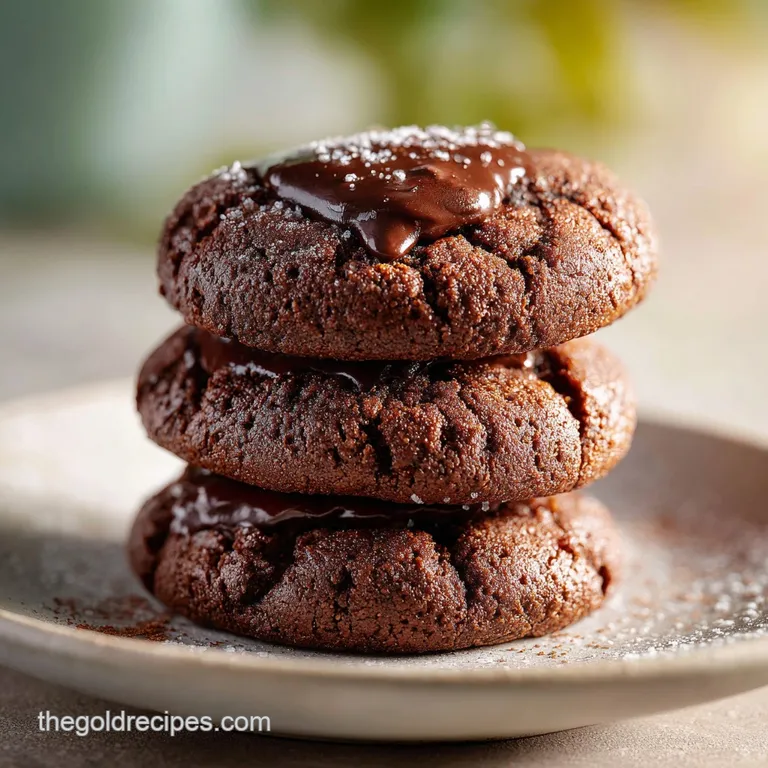
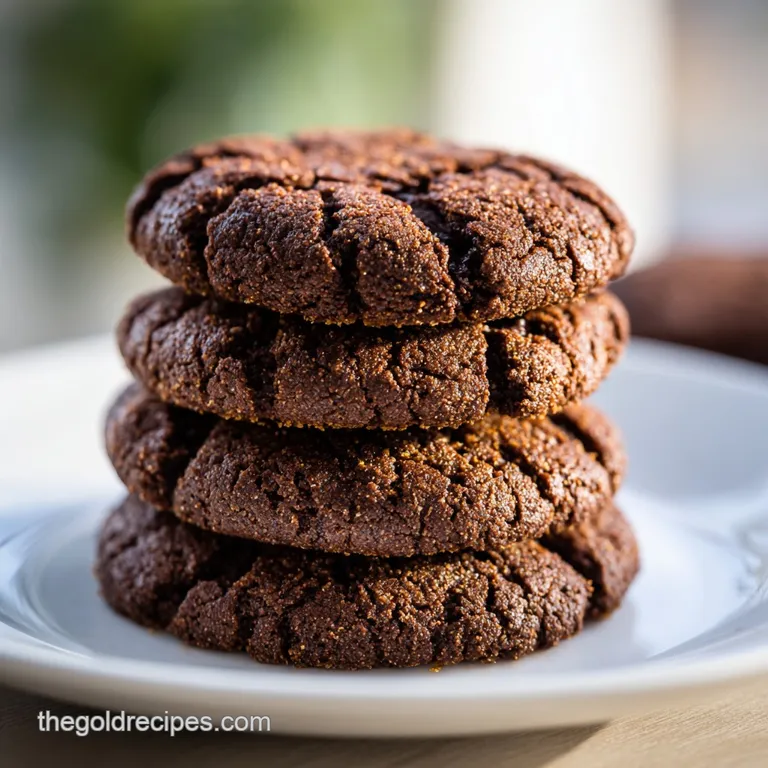
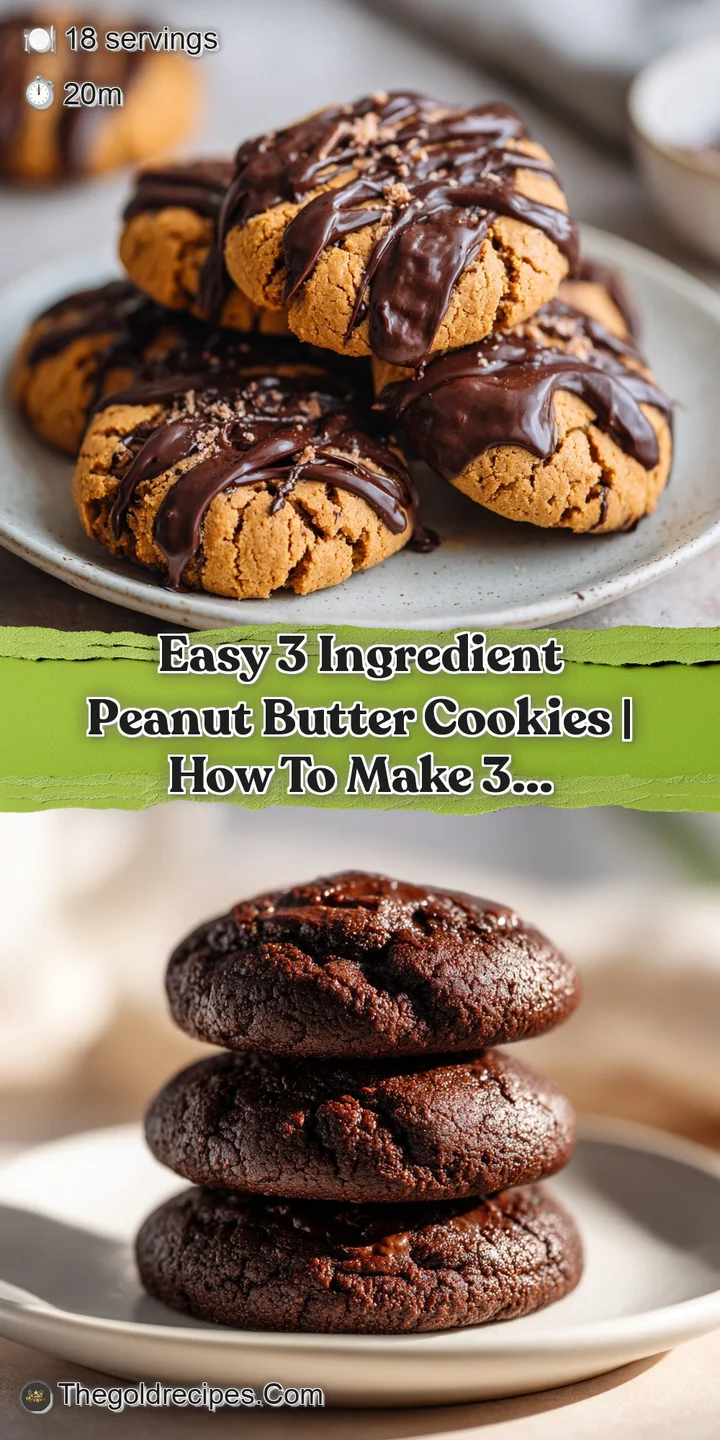
The visual appeal of these cookies lies in the contrast between the pale, sandy top and the dark, caramelized crosshatch marks. To make them look professional, ensure your fork tines are clean before each press.
Affogato Style Serving
Place one room temperature cookie at the bottom of a glass, top with a scoop of vanilla bean gelato, and pour a hot shot of espresso over it. The cookie will absorb the coffee while maintaining its nutty core, creating a sophisticated dessert with minimal effort.
The Classic Pairing
You cannot beat a cold glass of whole milk. The milk proteins help "wash" the palate of the heavy peanut fats, making every bite of the cookie taste as intense as the first. If you're feeling adventurous, try dipping them in a bit of melted dark chocolate for a homemade "Reese's" effect that is far superior to anything store-bought.
Recipe FAQs
What is the three ingredient recipe for peanut butter cookies?
Peanut Butter, Sugar, and Egg. Combine 1 cup creamy peanut butter, 1 cup granulated sugar, and 1 large egg until just smooth. This relies on the protein structure of the egg and sugar crystallization for stability, eliminating the need for flour.
Why are my 3 ingredient peanut butter cookies falling apart?
Likely overbaking or using natural peanut butter. Overbaking cooks the egg structure too rigidly, causing it to crumble instead of yield. Natural peanut butter separates its fat content during baking, leading to a fragile, greasy cookie.
What to bake with three ingredients?
These peanut butter cookies are the simplest option. Alternatively, try mixing 1 part dark chocolate chips, 1 part coconut oil, and 1 part cream cheese for an easy truffle base. If you prefer a savory option, consider the base ratios for our Roasted Carrots with recipe which relies on minimal components for maximum flavor concentration.
How to make cookie dough with 3 ingredients?
Mix the egg first until slightly frothy, then incorporate the peanut butter and sugar. Ensure you mix only until the ingredients are just combined into a cohesive mass; overmixing the dough after the egg is added can incorporate too much air, resulting in a cakey texture.
Can I substitute the egg in this 3 ingredient recipe?
Yes, but the texture will change significantly. Use a flax egg (1 tbsp flaxseed meal mixed with 3 tbsp water, rested 5 minutes) as the binder substitute. Since the egg provides significant lift, your resulting cookie will be denser and lack the signature shatter associated with the classic version.
What is the ideal baking temperature and time for structural set?
Bake at 180°C (350°F) for exactly 10 minutes. The structure sets through sugar crystallization, which requires high heat for a short duration. Pull them out when the edges look set but the center still appears slightly soft to avoid dryness.
If I want a richer flavor, should I use natural or commercial peanut butter?
Use commercial "no-stir" peanut butter for reliable structure. While natural peanut butter offers a superior flavor, its variable oil separation compromises the delicate protein matrix formed by the egg. If you are interested in mastering fat ratios in baking, the technique used to stabilize this dough is also key in our Chicken and Dumplings recipe for a rich, non-separated filling.
3 Ingredient Peanut Butter Cookies
Ingredients:
Instructions:
Nutrition Facts:
| Calories | 129 calories |
|---|---|
| Protein | 3.9 g |
| Fat | 7.2 g |
| Carbs | 13.9 g |
| Fiber | 0.8 g |
| Sugar | 12.4 g |
| Sodium | 70.6 mg |
