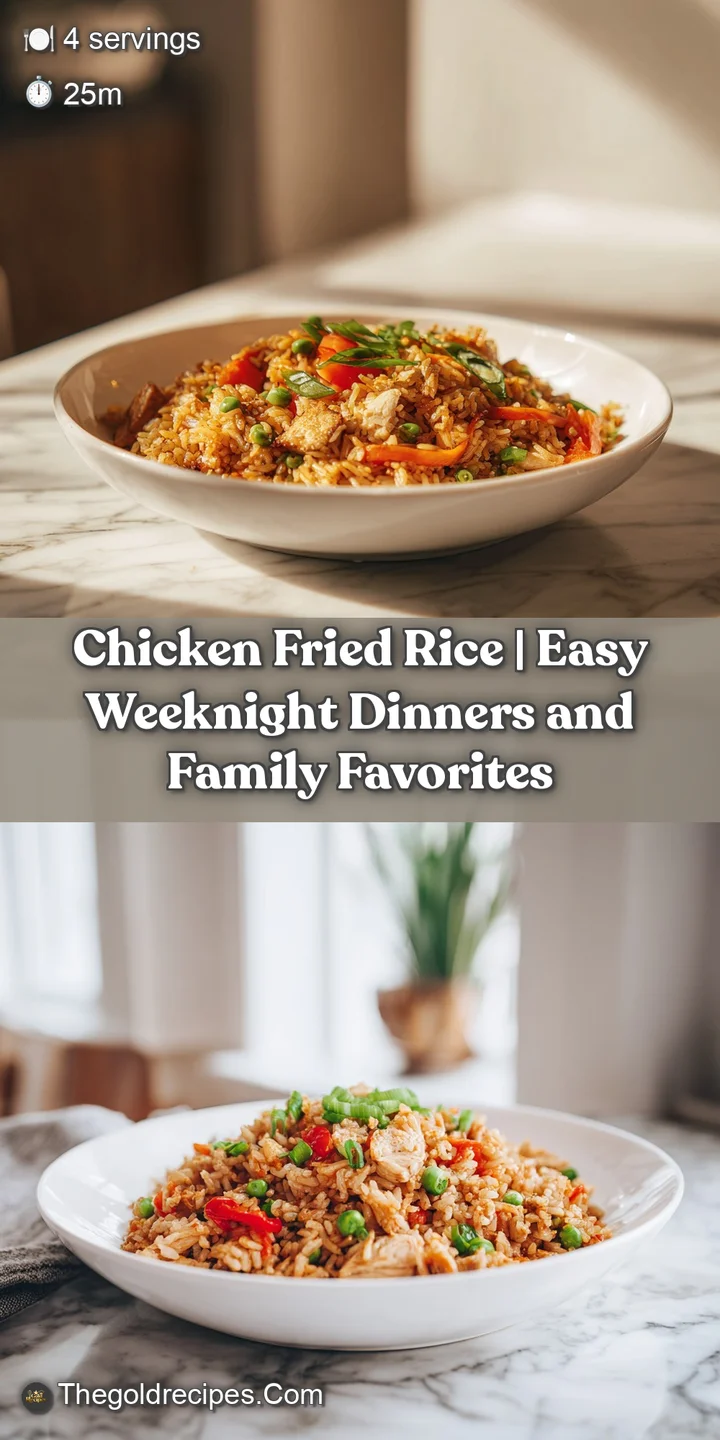
Chicken Fried Rice: Pan-Seared and Juicy
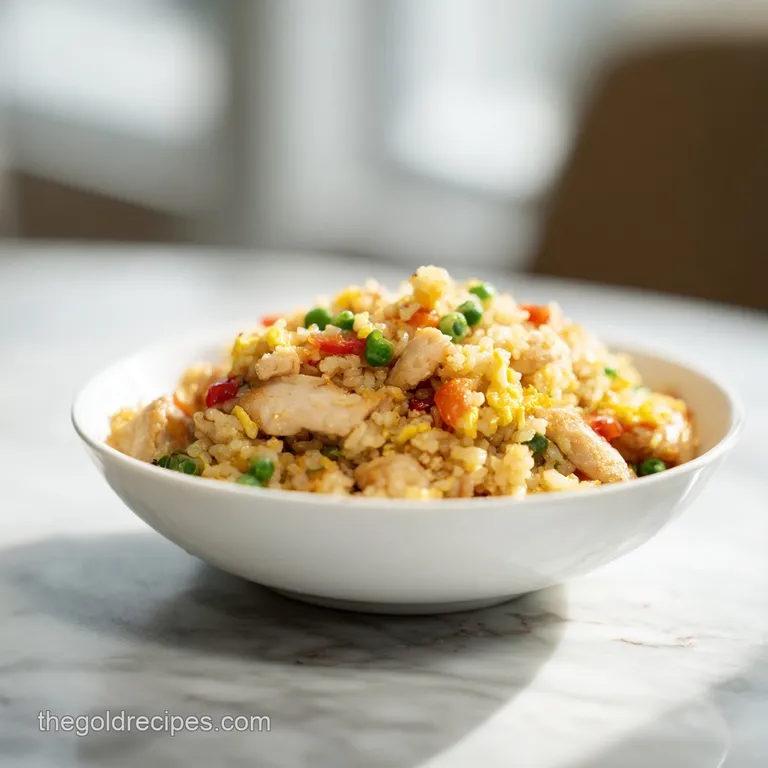
- Time: Active 15 minutes, Passive 10 minutes, Total 25 minutes
- Flavor/Texture Hook: Savory umami grains with charred, crispy edges
- Perfect for: Busy weeknights or cleaning out the fridge
Fried rice is not just a quick meal in my house; it is a direct link to a tradition of thriftiness that stretches back centuries. Legend has it that this dish found its footing during the Sui Dynasty, born from a cultural respect for every single grain of rice.
In many Chinese households, throwing away rice is considered a minor tragedy. You save the leftovers, you let them dry out, and you transform them into something even better the next day. To me, that sizzle of cold rice hitting a hot pan is the sound of home.
It’s the ultimate family favorite because it takes humble, budget friendly ingredients and turns them into a hearty feast that brings everyone to the table.
I remember watching an old family friend make this in a wok that looked like it had seen a thousand battles. There was no measuring, just a rhythmic clink clink clink of the metal spatula and a puff of steam that smelled like toasted sesame and ginger. That’s the feeling I want to give you today.
We aren't just making a quick stir fry; we are practicing the art of the "dry fry," where every grain stays separate and every piece of chicken is velvety and tender. It’s about finding that balance between the salty soy, the sharp ginger, and the sweetness of the peas and carrots.
We've all been there, staring at a bowl of mushy, clumpy rice that looks more like porridge than a takeout classic. It’s frustrating, right? But once you understand how the rice starch behaves and why high heat is your best friend, you’ll never settle for soggy rice again.
This version is designed to be approachable for a busy Tuesday night while still hitting those authentic notes that make your kitchen smell like your favorite neighborhood spot. Let’s get the prep started, because in this recipe, the prep is everything.
Essential Recipe Specifications
Before we heat up the pan, we need to talk about the "why" behind the results. I’ve spent years figuring out why my rice sometimes stuck to the bottom or why the chicken felt like rubber. It usually comes down to two things: moisture control and surface area.
When you crowd the pan, the temperature drops, and instead of frying, your food starts to steam. That’s how you get "sad" rice. We want "happy" rice - grains that dance and pop in the heat.
Retrogradation: When you chill rice overnight, the starch molecules crystallize. This makes the grains firm enough to withstand the vigorous tossing of a stir fry without breaking into a mushy paste.
The Velveting Shield: Mixing the chicken with cornstarch and a splash of soy sauce creates a thin barrier. This protects the delicate protein from the intense heat of the pan, keeping it juicy inside while the outside sears quickly.
Surface Toasting: High heat creates a specific aroma that only happens when the sugars in the soy sauce and the starches in the rice hit a screaming hot surface. This is what gives the dish its characteristic "charred" depth.
| Servings | Chicken Amount | Rice Quantity | Pan Size Needed |
|---|---|---|---|
| 2 People | 0.5 lb | 2 cups | 10 inch skillet |
| 4 People | 1 lb | 4 cups | 12 inch or 14 inch wok |
| 6 People | 1.5 lbs | 6 cups | 14 inch wok (cook in batches) |
When you are feeding a hungry family, it is tempting to double the recipe in one go. However, unless you have a professional grade burner, your stove likely can't keep a massive pile of rice hot enough to actually "fry" it. If you're doubling this for 8 people, I highly recommend doing it in two separate batches.
It actually takes less time in the long run because each batch fries in just a few minutes, whereas a crowded pan will take forever to evaporate the moisture.
This recipe is built on the philosophy of "mise en place," which is just a fancy way of saying "get your stuff ready." Since the actual cooking time is only 10 minutes, you won't have time to chop garlic while the chicken is searing.
Everything needs to be in its little bowl, standing by like soldiers on a parade ground. This prevents the garlic from burning and ensures the rice gets that perfect toast.
Deep Dive Into Ingredients
The ingredients for a great Chicken Fried Rice are simple, but the quality of each one matters immensely. We are using 1 lb of chicken breast, cut into uniform 1/2 inch cubes. Cutting them small is vital because they need to cook through in less than 3 minutes.
If the pieces are too big, the outside will be tough by the time the inside is safe to eat.
| Component | Role in Dish | Pro Secret |
|---|---|---|
| Day Old Jasmine Rice | Structure and body | Spread it on a tray in the fridge to dry it out faster |
| Cornstarch | Protein protection | It creates a "velvet" texture on the chicken meat |
| Oyster Sauce | Umami and salt | This provides the "hidden" depth found in restaurant versions |
| White Pepper | Heat and floral notes | Much more traditional than black pepper for this profile |
You’ll notice we use 3 large eggs. In our house, the egg is just as important as the chicken. It adds a richness that balances the saltiness of the soy sauce. We also use a trio of aromatics: 3 cloves of garlic, 1 tsp of fresh ginger, and the white parts of 3 stalks of green onions. These go into the oil first to scent the entire dish. If you're looking for a side dish to make this a full spread, it pairs beautifully with something like Texas Roadhouse Seasoned Rice if you're doing a fusion style dinner.
For the sauce, we aren't just dumping in soy sauce. We’re creating a balanced blend of 3 tbsp low sodium soy sauce, 1 tbsp toasted sesame oil, 1 tbsp oyster sauce, and 0.5 tsp white pepper. The toasted sesame oil is strong, so 1 tablespoon is plenty to give it that nutty aroma without overpowering the ginger.
If you're watching your salt, stick with the low sodium soy; the oyster sauce already brings a lot of salt to the party.
| Original Ingredient | Substitute | Why It Works |
|---|---|---|
| Canola Oil | Peanut Oil | Has a high smoke point and adds a subtle nutty finish |
| Chicken Breast | Chicken Thighs | Fat content makes them more forgiving if overcooked |
| Oyster Sauce | Vegetarian Stir Fry Sauce | Made from mushrooms, it keeps the umami without the shellfish |
| Jasmine Rice | Long Grain White Rice | Similar starch profile, though slightly less fragrant |
One thing I've learned the hard way: do not use "instant" or "minute" rice for this. It lacks the structural integrity to survive the stir fry process. If you forgot to make rice yesterday, you can make a fresh batch today, spread it out on a baking sheet, and put it in front of a fan for 30 minutes.
It’s not quite the same as day old, but it’s a whole lot better than using hot, gummy rice straight from the pot.
Recommended Kitchen Equipment
You don't need a thousand dollar setup to make incredible Chicken Fried Rice, but a few specific tools make the job much easier. A wok is the traditional choice because its high, sloped sides allow you to toss food vigorously without it flying all over your stove.
However, if you don't own a wok, a large cast iron skillet is a fantastic alternative. Cast iron holds onto heat like a champ, which is exactly what we need for that 30 second rice toast.
A good spatula is also a necessity. I prefer a flat, wide metal spatula (often called a wok turner) because it can get right under the rice to flip it. If you're using a non stick pan, please stick to silicone or wood to avoid scratching the coating. Speaking of heat, ensure your burner is capable of high output.
If you’re working on an electric coil stove, give it at least 5 minutes to fully preheat before you add the oil.
If you enjoy making quick, over high heat meals like this, you might also want to look into other stir fry variations. For example, my Teriyaki Chicken Stir Fry uses similar equipment and techniques but with a sweeter, glaze based finish. Having the right tools makes these 25 minute meals feel like a breeze rather than a chore.
Critical Cooking Steps
Now we get to the fun part. Cooking this dish is a fast paced dance, so take a breath and make sure your bowls are lined up. We are aiming for specific sensory cues: the change in color of the chicken, the smell of the toasted ginger, and the way the rice begins to "pop" when it hits the right temperature.
- Prep the components. In a small bowl, toss the 1 lb of cubed chicken with 1 tsp soy sauce and 1 tsp cornstarch. Note: This creates the protective coating. In a separate bowl, break up the 4 cups of cold rice by hand to ensure no clumps remain. Mix the sauce: 3 tbsp soy sauce, 1 tbsp sesame oil, 1 tbsp oyster sauce, and 0.5 tsp white pepper.
- Sear the chicken. Heat 1 tbsp of canola oil in a wok over high heat. Add the chicken in a single layer and sear undisturbed for 90 seconds. Cook until the edges are golden and opaque. Stir fry for 1 more minute until cooked through, then remove to a plate.
- Scramble the eggs. Add a small splash of oil to the wok. Pour in the 3 beaten eggs and scramble quickly for about 45 seconds until 80% set. They should still look slightly wet. Remove and add to the chicken plate.
- Toast the aromatics. Add the remaining 2 tbsp of oil to the screaming hot wok. Sauté the green onion whites, minced garlic, and grated ginger for 30 seconds. Stop as soon as the garlic smells fragrant but before it turns brown.
- Fry the rice. Add the cold rice, pressing it against the hot metal with your spatula to toast for 30 seconds. Listen for a light crackling sound. This creates the texture we want.
- The final toss. Add the chicken, eggs, and 1 cup of thawed peas and carrots back into the wok.
- Incorporate the sauce. Pour the sauce mixture over the rice.
- Finish on high. Toss everything on high heat for 2 minutes until the sauce is absorbed and the rice is steaming.
- Garnish and serve. Turn off the heat and toss in the green onion greens.
| Checkpoint | Measurement | Visual/Sensory Cue |
|---|---|---|
| Chicken Sear | 90 Seconds | Bottom side turns golden brown and releases easily |
| Rice Toast | 30 Seconds | Grains begin to jump or "pop" in the pan |
| Internal Temp | 165°F | Chicken is no longer pink and feels firm to the touch |
There is a specific moment in step 5 where the rice transforms. When you press it against the side of the wok, you are essentially "dry frying" the exterior of the grains. This is what prevents the sauce from soaking in and making the rice soggy.
You want the sauce to coat the outside of the grain, not saturate the middle. That’s why we only cook it for 2 minutes after adding the liquid.
Common Pitfalls To Avoid
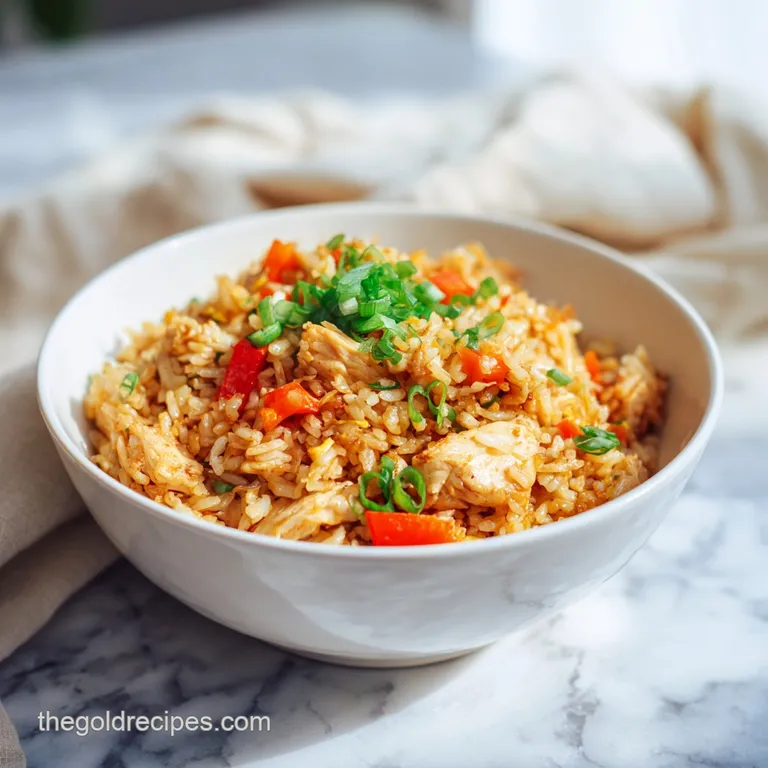
The biggest mistake most home cooks make is using fresh rice. I know I've mentioned it, but I can't stress it enough. Fresh rice is full of moisture. When you hit it with oil and heat, it turns into a gummy ball. If you absolutely must use fresh rice, cook it with 25% less water than usual so the grains stay very firm.
Another common issue is the "cold pan" syndrome. If the oil isn't shimmering and slightly wispy with smoke, don't add the rice yet.
To Avoid "Mushy" Rice
Mushy rice is usually caused by two things: too much moisture in the grain or too much liquid in the sauce. By using 4 cups of day old rice and only a few tablespoons of sauce, we keep the ratio balanced. If you find your rice is still getting soft, try increasing the heat and cooking in smaller batches.
This ensures the moisture evaporates instantly rather than soaking back into the rice.
| Problem | Root Cause | Solution |
|---|---|---|
| Rice sticks to pan | Pan wasn't hot enough or not enough oil | Preheat pan until wispy smoke appears before adding oil |
| Bland flavor | Rice didn't toast or not enough aromatics | Press rice against the pan and increase ginger/garlic next time |
| Rubbery chicken | Overcooked or skipped the cornstarch | Sear for only 90 seconds initially and use the cornstarch marinade |
The cornstarch in the marinade is a little miracle worker, but if you use too much, the chicken will feel slimy. Stick to the 1 tsp measurement. It’s just enough to bind with the soy sauce and create that "velvet" texture. Also, make sure your peas and carrots are fully thawed and patted dry.
Adding frozen vegetables directly to the wok will drop the temperature instantly and release a lot of water, which is the enemy of a good fry.
Common Mistakes Checklist
- ✓ Never use warm or freshly cooked rice (it will clump and turn to mush).
- ✓ Don't skip the "rest" for the chicken; removing it while you cook the rice prevents overcooking.
- ✓ Break up the rice clumps by hand before they hit the pan.
- ✓ Use a high smoke point oil like canola or peanut; butter will burn too quickly.
- ✓ Keep the heat on high the entire time to achieve that "toasted" aroma.
Personalize Your Stir Fry
Once you have the base method down, the variations are endless. This is a budget friendly way to use up whatever is in the crisper drawer. If you have some wilting bok choy or a half used bell pepper, chop them small and toss them in with the aromatics. The beauty of this recipe is its flexibility.
You can swap the chicken for shrimp, pork, or even firm tofu. If using tofu, make sure to press it well and sear it until crispy before removing it from the pan.
For a Spicy Kick
If your family likes a bit of heat, you have a few options. You can add 1 tsp of red chili flakes to the oil along with the garlic and ginger. Alternatively, a drizzle of Sriracha or a spoonful of chili crisp at the very end adds both heat and texture.
I personally love adding a little sambal oelek into the sauce mixture for a bright, vinegary spice that cuts through the richness of the sesame oil.
To Make It Low Carb
While it won't be "authentic" in the traditional sense, you can substitute the 4 cups of rice with 4 cups of riced cauliflower. If you do this, skip the "rice toasting" step and only sauté the cauliflower for 3-4 minutes.
Cauliflower releases a lot of water, so you want to cook it fast and over very high heat to keep it from becoming a puree. It’s a great way to get more veggies into the kids without them complaining too much!
| Premium Ingredient | Budget Alternative | Flavor Impact |
|---|---|---|
| Fresh Ginger | Ground Ginger (1/4 tsp) | Less "zing" but still provides warmth |
| Oyster Sauce | Extra Soy + Pinch of Sugar | Loses the thick texture but keeps the salt |
| Sesame Oil | Toasted Sesame Seeds | Provides the nuttiness without the oily mouthfeel |
For a Salty Crunch
For a bit of texture, some families like to add roasted cashews or peanuts at the very end. This is common in some regional styles of fried rice and adds a lovely crunch that contrasts with the soft eggs and tender chicken.
If you go this route, just toss them in with the green onion greens so they stay crunchy and don't get softened by the steam of the pan.
Storage And Reheating Guide
Chicken Fried Rice is one of those rare dishes that almost tastes better the next day as the flavors continue to meld. You can store leftovers in an airtight container in the fridge for up to 3 days.
Because we used 1 lb of chicken and 4 cups of rice, this recipe makes 4 generous servings, which is perfect for lunch prep. To reheat, I recommend using a skillet over medium heat with a tiny splash of water to help "steam" the rice back to life. Microwaving works too, but it can sometimes make the chicken a bit tough.
If you want to freeze this, it actually holds up surprisingly well. Let it cool completely, then portion it into freezer bags. It will stay good for up to 2 months. To eat, let it thaw in the fridge overnight and then stir fry it briefly in a pan to restore the texture.
It’s a lifesaver for those nights when you're too tired to even think about cooking but want something hearty and homemade.
For a zero waste approach, don't throw away your broccoli stems or the slightly soft ends of your celery. If you peel the tough outer layer of the broccoli stem and dice it small, it has a wonderful crunch that mimics water chestnuts. Celery adds a nice herbal note too.
Fried rice is the "everything drawer" of the culinary world nothing should go to waste!
Favorite Side Dish Ideas
While a big bowl of Chicken Fried Rice is a complete meal on its own, sometimes you want a full spread for a weekend family dinner. If you want to keep the "takeout" theme going, it pairs perfectly with crispy spring rolls or a simple cucumber salad dressed with rice vinegar and a pinch of sugar.
The acidity of a salad helps balance the savory, umami heavy notes of the rice.
Another great option is a simple egg drop soup or a hot and sour soup. Since you already have the ginger and garlic out for the rice, making a quick soup only takes an extra 10 minutes. If you're looking for another protein heavy side, my Teriyaki Chicken Stir Fry offers a different flavor profile that complements the savory rice perfectly.
Common Myths
Myth: You must have a wok to make good fried rice. The Truth: While a wok is great for tossing, a large, heavy bottomed skillet (like cast iron) works just as well on a standard home stove. The most important factor is the heat of the pan and the age of the rice, not the shape of the vessel.
In fact, many professional chefs prefer a flat surface for getting the maximum "crust" on the grains.
Myth: Searing meat "seals in the juices." The Truth: Moisture loss happens regardless of searing. What the sear actually does is create the Maillard reaction, which develops deep, complex flavors on the surface of the chicken.
The cornstarch in our marinade is what actually helps retain moisture by forming a physical barrier, not the sear itself.
Myth: Soy sauce is the only seasoning you need. The Truth: While soy sauce provides salt and color, the real "restaurant" flavor comes from the combination of oyster sauce, sesame oil, and white pepper. Using only soy sauce can make the dish taste "one note" and overly salty.
That balance of umami and aromatics is what makes people go back for second helpings.
Very High in Sodium
985 mg 985 mg (43% 43%)
The American Heart Association recommends limiting sodium intake to no more than 2,300mg per day, ideally striving for less than 1,500mg per day for most adults.
Tips to Reduce Sodium in Your Fried Rice
-
Swap Regular Soy Sauce for Low-Sodium and Reduce-30%
Replace the 3 tbsp of regular soy sauce with an equal amount of low-sodium soy sauce. Additionally, reduce the initial 1 tsp of soy sauce in the chicken marinade to half (0.5 tsp) or omit it entirely.
-
Dilute Oyster Sauce-20%
Oyster sauce is a significant sodium contributor. Try replacing the 1 tbsp of oyster sauce with half oyster sauce and half a low-sodium broth or water, or explore oyster sauce alternatives with less sodium.
-
Amplify Flavors with Aromatics and Spices
Increase the amounts of garlic, ginger, and green onions. Consider adding other sodium free flavor boosters like red pepper flakes, citrus zest, or a touch of vinegar to compensate for reduced saltiness.
-
Rethink Egg Marinade-5%
The 1 tsp of soy sauce in the egg marinade can be omitted. The eggs themselves provide moisture and binding properties, and the 1 tsp cornstarch helps with texture.
Recipe FAQs
Why is my fried rice soggy?
Use cold, day-old jasmine rice. Fresh, hot rice contains excess surface moisture that turns to steam in the pan, creating a mushy texture rather than the desired toasted finish.
Is it true I can use hot, freshly cooked rice for this?
No, this is a common misconception. Freshly cooked rice is too moist and will clump together; chilling the rice overnight in the refrigerator is the secret to achieving distinct, separate grains.
How to prevent the chicken from drying out during the stir fry?
Toss the cubed chicken with 1 tsp cornstarch and 1 tsp soy sauce before cooking. This creates a protective coating that seals in moisture during the high heat searing process.
How to get that smoky "wok hei" flavor at home?
Heat your wok or cast iron skillet until it is screaming hot before adding the oil. If you enjoyed mastering this high heat searing technique, you will find it equally effective for achieving a perfect golden crust in our Chicken Piccata.
How to reheat leftovers without making the chicken tough?
Reheat in a skillet over medium heat with a tiny splash of water. The steam gently revives the rice and chicken, which prevents the microwave induced rubbery texture that often ruins protein.
Can I store this for meal prep?
Yes, this dish stays fresh in an airtight container for up to 3 days in the refrigerator. Since this recipe yields 4 generous servings, it is an efficient option for quick mid-week lunches.
How to scramble the eggs without overcooking them?
Scramble the eggs quickly in the hot wok until they are 80% set, then immediately remove them. You will fold them back into the rice at the final stage so they finish cooking without turning dry or rubbery.
Easy Chicken Fried Rice
Ingredients:
Instructions:
Nutrition Facts:
| Calories | 618 kcal |
|---|---|
| Protein | 46.2 g |
| Fat | 24.1 g |
| Carbs | 51.4 g |
| Fiber | 3.2 g |
| Sugar | 2.1 g |
| Sodium | 985 mg |
