Easy Peach Cobbler with Canned Peaches
- Time: Active 10 mins, Passive 45 mins, Total 55 mins
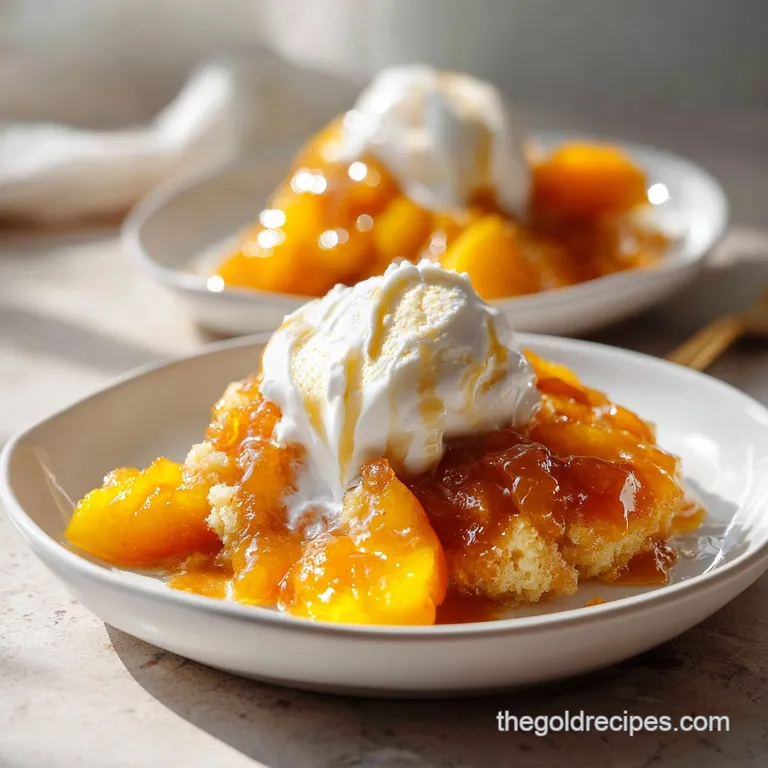
- Flavor/Texture Hook: Buttery, syrupy peaches with a golden sugar crust
- Perfect for: Last minute family gatherings or cozy Sunday dinners
- Achieving the Best Golden Peach Cobbler
- Understanding the Physics of Crust
- Measuring Vital Recipe Baking Metrics
- Selecting Quality Ingredients and Swaps
- Gathering Essential Kitchen Baking Tools
- Navigating the Step-By-Step Baking Method
- Solving Common Texture and Rise Errors
- Adapting the Dish for Dietary Needs
- Storing Leftovers for Maximum Freshness
- Choosing the Best Topping Combinations
- Dispelling Common Baking Myths
- Recipe FAQs
- 📝 Recipe Card
Achieving the Best Golden Peach Cobbler
There is a specific sound that defines a perfect Sunday afternoon in my kitchen: the soft shatter of a caramelized sugar crust as a heavy silver spoon dives into a warm dish. It’s followed immediately by the scent of toasted cinnamon and that distinct, velvety aroma of peaches that have been simmering in their own juices.
This isn't just a dessert; it is the centerpiece of the table that brings my noisy family to a sudden, appreciative hush.
I remember the first time I tried making this. I thought I knew better than the old recipe card and stirred the batter into the fruit. It was a disaster a grey, gummy mess that looked nothing like the photos. I learned the hard way that the beauty of this dish lies in the "magic" of the layering.
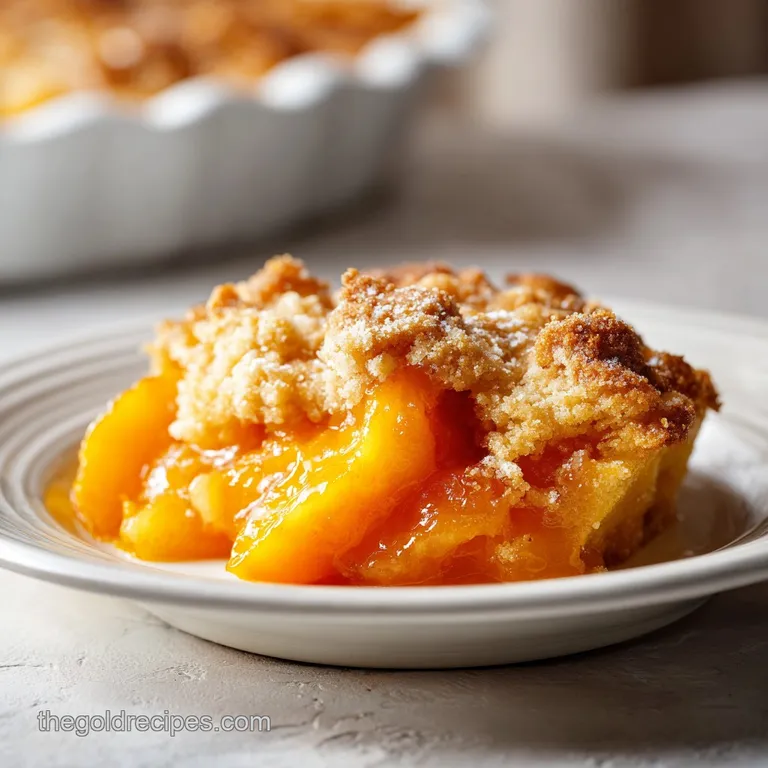
By resisting the urge to stir, you let the heat of the oven do the heavy lifting, pushing the batter up through the fruit to create those iconic crags and peaks.
We are going for a hearty, soul warming result here. It’s the kind of dish that doesn’t care about being elegant or plated with tweezers. It wants a big scoop of cold cream on top and a seat at a table full of people you love.
Whether you are using the shortcut of canned fruit or looking for that nostalgic Southern flavor, this method is the one I’ve relied on for years because it simply never fails to deliver.
Understanding the Physics of Crust
The Leavening Lift: Baking powder reacts with the heat and moisture of the milk to create carbon dioxide bubbles that push the batter upward through the heavy fruit.
Starch Gelatinization: Cornstarch binds with the reserved peach liquid during the bake, turning thin syrup into a thick, glossy sauce that clings to the fruit.
The Maillard Effect: The combination of granulated sugar and whole milk proteins on the surface creates a golden brown, crispy exterior through caramelization.
Fat Saturation: Melting the butter directly in the pan before adding batter ensures the bottom and edges of the cobbler fry slightly, creating a decadent, crispy rim.
| Visual Cue | Internal Temp | Texture Goal | Rest Time |
|---|---|---|---|
| Deep golden edges | 90°C | Springy batter | 10 minutes |
| Bubbling syrup | 95°C | Thick and glossy | 15 minutes |
| Pale and soft | 75°C | Doughy/underbaked | Return to oven |
The cooling period is actually a hidden part of the cooking process. As the dish sits on your counter, the starches in the peach filling finish setting. If you dig in immediately, the sauce will be runny; waiting those ten minutes ensures every spoonful is thick and syrupy.
Measuring Vital Recipe Baking Metrics
When we look at how these humble components work together, it becomes clear why certain ratios matter. We aren't just tossing things in a bowl; we are setting up a chain reaction that results in that signature texture we all crave.
| Component | Logic Role | Pro Secret |
|---|---|---|
| All Purpose Flour | Structure | Don't overmix to keep the crumb tender and light. |
| Whole Milk | Hydration | Use room temperature milk to keep the melted butter from seizing. |
| Baking Powder | Aeration | Ensure it’s fresh so the batter successfully climbs over the peaches. |
| Granulated Sugar | Crispness | Sprinkle a extra tablespoon on top before baking for a "shatter" crust. |
Using the right fat content is the difference between a "fine" dessert and a "hearty" one. I always insist on whole milk here because the extra fat provides a richness that lower fat versions simply can't match. It's about that mouthfeel that velvety coating that makes the cobbler feel like a warm hug.
Selecting Quality Ingredients and Swaps
For this recipe, we are using specific quantities to ensure the balance of fruit to crust is exactly right. I’ve tested this with various brands, and the consistency of standard canned peaches is actually a benefit here.
- 2 cans (425g each) sliced peaches: These provide the consistent sweetness and soft texture needed. Why this? Canned peaches are pre softened, ensuring they meld perfectly with the quick baking batter.
- Substitute: 4 cups of fresh peeled peaches tossed with 50g sugar.
- 113g unsalted butter: This is the foundation of the flavor and the "frying" medium for the crust. Why this? Unsalted allows you to control the seasoning precisely with the added salt.
- Substitute: Salted butter (just omit the 1/2 tsp salt from the dry mix).
- 125g all purpose flour: The primary structure for our rising batter. Why this? AP flour has the right balance of strength without being too heavy.
- Substitute: A 1:1 gluten-free flour blend with xanthan gum.
- 200g granulated sugar: Used in both the batter and to macerate the fruit slightly. Why this? Sugar provides the sweetness and the essential golden brown crust.
- Substitute: Light brown sugar for a deeper, molasses like flavor.
- 240ml whole milk: Provides the moisture and fat needed for a tender crumb. Why this? The fat in whole milk creates a richer, more satisfying texture.
- Substitute: Unsweetened almond milk for a lighter, nuttier profile.
Gathering Essential Kitchen Baking Tools
You don't need a professional pastry kitchen to make a world class Peach Cobbler, but having a few specific items will make your life much easier. I always reach for my 23x33 cm ceramic baking dish because it holds heat evenly, but a heavy glass dish works wonders too.
A sturdy whisk is non negotiable for the batter. You want to knock out the big lumps of flour without overworking the mixture. I also recommend a small fine mesh strainer for draining the peaches. It’s a simple step, but reserving exactly 60ml (1/4 cup) of that heavy syrup is what gives the fruit base its body.
Finally,, if you have a kitchen scale, use it. Measuring flour by the cup is notoriously inaccurate you can end up with 30% more flour than intended just by how tightly you pack the scoop. Weighing out 125g of flour ensures your batter stays light and fluffy rather than turning into a dense biscuit.
Navigating the step-by-step Baking Method
- Preheat and Prep. Set your oven to 180°C (350°F). Place the 113g of unsalted butter into your 23x33 cm baking dish and slide it into the oven while it preheats until the butter is completely melted and bubbling.
- Drain the Peaches. Open the 2 cans of peaches. Use a strainer to drain them, but make sure to catch and reserve 60ml (1/4 cup) of the heavy syrup. Note: This syrup is liquid gold for the sauce's flavor.
- Thicken the Fruit. In a medium bowl, toss the drained peaches with the reserved 60ml syrup, 1 tbsp cornstarch, 1 tsp cinnamon, and 1/4 tsp nutmeg until the fruit is evenly coated in a dull, spiced film.
- Mix Dry Ingredients. In a separate large bowl, whisk together the 125g flour, 200g sugar, 1 tbsp baking powder, and 1/2 tsp salt.
- Create the Batter. Pour the 240ml whole milk and 1 tsp vanilla extract into the dry ingredients. Whisk gently by hand until just combined and no large streaks of flour remain. Note: A few small lumps are perfectly fine; don't overmix.
- The Butter Layer. Carefully remove the hot baking dish from the oven. Pour the batter directly over the melted butter. Do not stir the batter and butter together.
- Add the Fruit. Spoon the peach mixture evenly over the top of the batter. Again, resist the urge to stir. The batter needs to be on the bottom to rise correctly.
- The Golden Bake. Place the dish back into the oven. Bake for 45 minutes until the top is deep golden brown and the fruit juices are thick and bubbling.
- The Final Rest. Remove from the oven and let it sit on a wire rack for 10 to 15 minutes. This allows the syrup to thicken into a velvety sauce.
Chef's Tip: For an extra crunchy "shatter" top, mix a tablespoon of sugar with a pinch of cinnamon and sprinkle it over the cobbler during the last 10 minutes of baking. The sugar will crystallize against the heat, creating a texture like a brûlée.
Solving Common Texture and Rise Errors
Why Your Cobbler Stayed Flat
If your batter didn't rise through the peaches, the most common culprit is expired baking powder. Baking powder loses its "oomph" faster than you’d think. Another reason is overcrowding the fruit; if the peaches are packed too tightly in a small dish, the batter can't find a way to the surface.
Why the Middle is Soggy
A soggy center usually happens when the peaches weren't drained well enough or the oven temperature was too low. The cornstarch is there to help, but it needs a full 45 minutes at 180°C to activate and thicken the juices.
If it looks pale at 45 minutes, give it another 5.
| Problem | Root Cause | Solution |
|---|---|---|
| Gummy Batter | Overmixing the flour | Whisk until just combined; stop immediately. |
| Runny Syrup | Skipped the cornstarch | Always toss fruit with starch before baking. |
| Greasy Edges | Butter was too hot | Let the butter melt, but don't let it brown. |
- ✓ Check the "best by" date on your baking powder before starting.
- ✓ Pat the peaches slightly if they seem excessively slippery after draining.
- ✓ Ensure your oven is fully preheated; a cold start ruins the rise.
- ✓ Use the exact pan size specified to ensure even heat distribution.
- ✓ Never stir the layers trust the "magic" of the oven heat.
Adapting the Dish for Dietary Needs
While the classic version is a staple in my house, I know many friends need to tweak things for health or allergies. You can still get a hearty, satisfying result with a few smart swaps.
For a gluten-free version, a high-quality 1:1 baking flour works best. Just be aware that gluten-free flours often absorb more liquid, so your batter might look a bit thicker. I usually add an extra tablespoon of milk to keep it pourable.
The taste remains remarkably similar because the peaches and cinnamon do the heavy lifting.
If you are looking for a dairy-free option, substitute the butter with a vegan buttery stick (the kind that's solid at room temperature) and the milk with full fat oat milk. Oat milk has a natural creaminess that mimics dairy better than almond or soy in baked goods.
| Method | Time | Texture | Best For |
|---|---|---|---|
| Standard Oven | 45 mins | Crispy top, soft middle | Traditional family dinner |
| Cast Iron Skillet | 40 mins | Extra crispy, dark edges | Rustic, smoky flavor |
| Slow Cooker | 3 hours | Dumpling like, very soft | Set and forget convenience |
Storing Leftovers for Maximum Freshness
Peach Cobbler is one of those rare dishes that actually tastes incredible the next day. The flavors have a chance to meld, and the spices deepen. I actually find a cold scoop of cobbler for breakfast is one of life’s secret pleasures.
- Fridge: Store in an airtight container for up to 4 days. The crust will soften, but the flavor remains excellent.
- Freezer: You can freeze the baked cobbler for up to 3 months. Wrap it tightly in foil and then plastic wrap. Thaw in the fridge overnight before reheating.
- Reheating: To get that crispness back, don't use the microwave. Put a portion in a small oven safe dish and bake at 180°C for 10 minutes.
- Zero Waste: If you have leftover peach syrup in the can that you didn't use for the recipe, don't pour it down the drain! Simmer it with a bit of ginger and use it as a syrup for pancakes or cocktails.
Choosing the Best Topping Combinations
The classic way to serve this is, of course, "a la mode" with a giant, melting scoop of vanilla bean ice cream. The cold cream hitting the hot, spiced peaches creates a sauce that is truly legendary. But if you want to switch things up, there are a few other ways to bring this to the table.
A dollop of unsweetened whipped cream with a tiny bit of lemon zest can cut through the sweetness of the canned peaches beautifully. The acidity of the lemon wakes up the flavor of the fruit.
Alternatively, if you're serving this for a brunch, a spoonful of thick Greek yogurt adds a tangy contrast that makes the dish feel a little more "breakfast appropriate."
| Premium Choice | Budget Alternative | Flavor Impact |
|---|---|---|
| Fresh Peaches | Canned Peaches | Canned is sweeter/softer |
| Heavy Cream | Whole Milk | Milk is lighter/less rich |
| Vanilla Bean | Vanilla Extract | Extract is classic/cheaper |
Regardless of how you top it, make sure you serve it warm. There is something about the temperature contrast that makes the buttery crust feel even more indulgent. It’s the ultimate way to end a meal and leave everyone feeling completely satisfied.
Dispelling Common Baking Myths
One myth I hear all the time is that you must use fresh peaches for a good cobbler. Honestly? In the middle of winter, a fresh peach is often hard and flavorless. Canned peaches are picked at their peak and packed in syrup, which actually provides a more consistent, jammy result for this specific style of dessert.
Don't feel guilty about taking the shortcut it's often the better choice.
Another common misconception is that you need to peel fresh peaches if you do use them. I say keep the skins! They soften significantly during the 45 minute bake and add a beautiful touch of color and a bit of extra structure to the fruit layer. Plus, it saves you twenty minutes of tedious work.
Finally, people often think the batter will be "bready" or dry if it's on the bottom. Because of the "no stir" method and the amount of butter in the pan, the batter essentially poaches in butter and peach juice.
It ends up being the furthest thing from dry it's more like a cross between a sponge cake and a steamed pudding. Trust the process and keep that spoon out of the dish until it's done!

Recipe FAQs
What are the three key ingredients in basic peach cobbler?
Peaches, flour, and butter. Peaches form the fruit base, flour creates the structure for the batter, and butter is essential for the rich, crispy edges.
Should you drain the juice from canned peaches for peach cobbler?
Yes, drain most of it, but reserve some. You should drain the bulk of the syrup, but reserve 60ml (1/4 cup) to toss with the fruit and cornstarch for the sauce base.
What are the most common mistakes when making peach cobbler?
Stirring the batter into the fruit and using expired baking powder. Stirring creates a gummy, grey mess instead of a distinct crust, and old leavening agents prevent the batter from rising over the peaches.
Can you use canned peaches for baking peach cobbler?
Yes, canned peaches are often preferred for consistency. They are pre-softened and packed in syrup, giving you a reliable sweetness and texture that fresh peaches may lack depending on the season.
How to achieve the signature "shatter" crust on top?
Sprinkle extra sugar on top during the final baking stage. Mixing granulated sugar with a pinch of cinnamon and dusting it over the batter in the last ten minutes encourages deep caramelization.
Is it true that the cobbler must rest before serving?
Yes, a 10 to 15 minute rest is crucial. This resting period allows the starches in the hot peach juices to gelatinize and thicken, preventing a runny sauce when you scoop it.
How to ensure the butter creates a crisp bottom layer?
Melt the butter in the pan before adding any batter. Pour the raw batter over the hot, melted butter in the preheated pan; the bottom layer essentially fries slightly as the cobbler bakes.
Easy Canned Peach Cobbler
Ingredients:
Instructions:
Nutrition Facts:
| Calories | 331 calories |
|---|---|
| Protein | 3.0g |
| Fat | 12.7g |
| Carbs | 52.5g |
| Fiber | 1.4g |
| Sugar | 37.6g |
| Sodium | 325mg |
